7 Running Mistakes That Only Show Up Once It's Hot Out
Quick Answer: The biggest heat-running mistakes are pacing by feel instead of heart rate, under-hydrating before the run (not just during), wearing dark or cotton fabrics, and skipping electrolytes — all mistakes that don’t matter much in cool weather but become significant once it’s hot.
Running form advice mostly assumes moderate temperatures. Once real heat shows up, a handful of habits that were harmless in spring suddenly cost you a lot more. Here are seven of them.

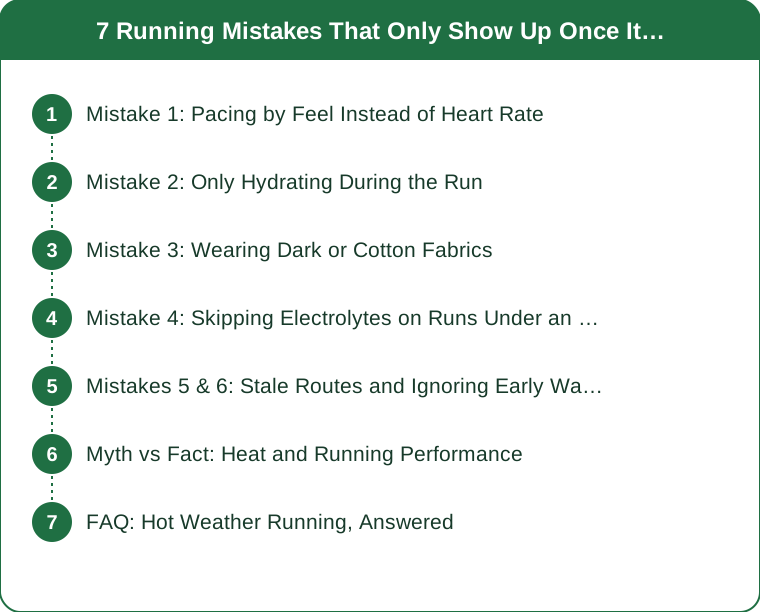
Mistake 1: Pacing by Feel Instead of Heart Rate
In the heat, the same pace that felt easy in cooler weather pushes your heart rate noticeably higher because your body is diverting blood to the skin for cooling. Pacing by heart rate zone instead of a fixed mile split keeps effort honest even as conditions change.
Mistake 2: Only Hydrating During the Run
By the time you’re thirsty mid-run, you’re already behind. Starting well-hydrated — roughly 16 oz in the 1-2 hours beforehand — matters more in heat than drinking more once you’re already running.
Mistake 3: Wearing Dark or Cotton Fabrics
Dark colors absorb more radiant heat, and cotton holds sweat against the skin instead of wicking it away, both of which raise your effective body temperature during a hot run compared to light-colored, moisture-wicking gear.

Mistake 4: Skipping Electrolytes on Runs Under an Hour
The ‘only need electrolytes on long runs’ rule assumes moderate temperatures. In real heat, sodium loss through sweat ramps up fast enough that even a 40-45 minute run can benefit from electrolyte replacement, not just runs over 90 minutes.
Mistakes 5 & 6: Stale Routes and Ignoring Early Warning Signs
A route that’s shaded and cool at 7am in April can be in direct sun by 7am in July depending on season and route orientation — reassessing your usual run time and route for shade coverage each season prevents surprises.
On top of that, feeling unusually hot or your heart rate spiking in the first 10 minutes is a stronger heat-stress signal than most runners give it credit for — it often means today calls for a slower pace or shorter distance, not pushing through.
Myth vs Fact: Heat and Running Performance
Myth: You’ll acclimate to heat within a few runs. Fact: Real heat acclimation takes 10-14 days of consistent exposure — a couple of hot runs barely start the process.
Myth: Drinking more water always fixes heat struggles. Fact: Overhydrating without electrolytes can cause its own problems (hyponatremia); the fix is balanced hydration, not just more plain water.

FAQ: Hot Weather Running, Answered
How much should I slow down when it’s hot?
A common guideline is roughly 20-30 seconds per mile slower for every 5°F above 60°F, though individual heat tolerance varies significantly.
Is it dangerous to run in extreme heat at all?
Above roughly 90°F with high humidity, many coaches recommend moving runs indoors or to early morning — heat illness risk climbs sharply in that range regardless of fitness level.
Does humidity matter more than temperature?
Often yes — humidity blocks sweat evaporation, your primary cooling mechanism, so a humid 80°F day can feel more dangerous than a dry 90°F day.
TL;DR:
- Pace by heart rate, not feel, once it’s hot
- Hydrate before the run, not just during
- Light, wicking fabrics beat dark cotton in the heat
- Add electrolytes even on shorter runs once temperatures climb
- Heat acclimation takes 10-14 days of consistent exposure
This is general information, not medical advice — stop and cool down immediately if you notice dizziness, confusion, or stop sweating during a hot run.
Keep Reading
This article is for general informational purposes only and is not medical advice. It is not a substitute for professional diagnosis or treatment. Always consult a qualified healthcare provider about your individual situation, especially before making significant changes to your diet or exercise routine.