7 Reasons Your Easy Runs Aren't Actually Easy
Quick Answer: The most common reason is simply running easy runs too fast — the majority of recreational runners run their easy days at moderate intensity, which produces the fatigue of hard training with the benefit of neither. The other six are pace-checking behaviour, terrain, fuel, sleep, heat, and running easy immediately after a hard day. All seven are diagnosable in one run.
You are doing the thing everyone recommends. Easy runs, most days, nothing heroic.
And every single one of them feels like a moderate effort you have to concentrate on.
Seven reasons, roughly in order of how often each is the culprit.

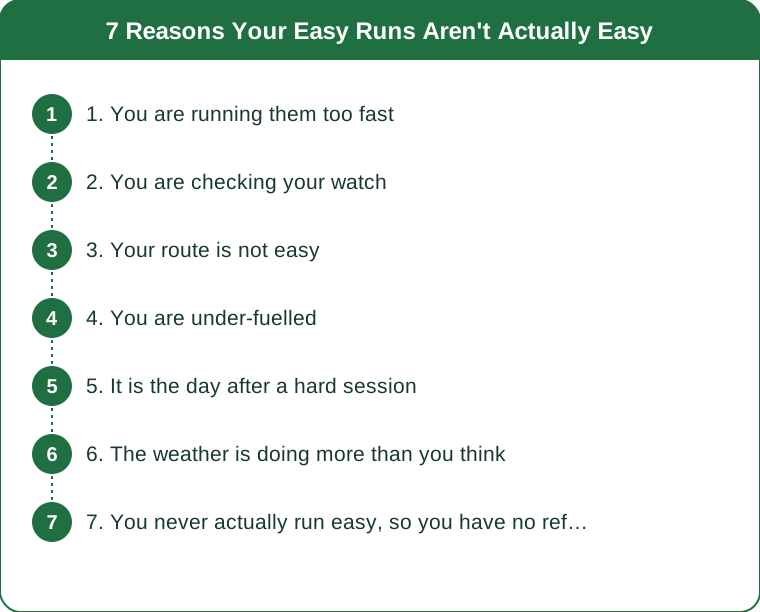
1. You are running them too fast
This is the answer most of the time, and the numbers are stark.
Research on how recreational runners distribute intensity repeatedly finds that a substantial share of intended easy running actually happens at moderate intensity — above the first ventilatory threshold, in the zone that is too hard to be recovery and too easy to be a stimulus.
The practical marker is conversation. If you cannot speak in full sentences comfortably, it is not an easy run. Not short phrases between breaths. Full sentences, comfortably, indefinitely.
For most people this means going 60 to 90 seconds per kilometre slower than they think, which feels absurd for about two weeks and then feels like the best decision they have made.
2. You are checking your watch
Every glance at the pace field is an invitation to speed up.
Runners consistently drift faster when watching pace, because a slow number feels like a verdict rather than a plan. The number rewards the wrong thing on the wrong day.
Turn the pace field off for easy runs. Show time, or nothing. If you want a guardrail, use heart rate — but the more reliable version is run by breathing and check the data afterwards.
People who do this for three weeks almost always find their easy pace settles slower and their hard sessions get faster, which is exactly the point of the whole structure.
3. Your route is not easy
A rolling route with 150 metres of climbing is not an easy run at easy pace. The effort follows the terrain, not the plan.
Hills, trails, soft ground, wind and stairs all raise the cost of the same pace substantially. So does a route with road crossings that force repeated accelerations.
Give your easy days a genuinely flat, boring, uninterrupted route. It is the least exciting change on this list and one of the most effective.
Save the interesting terrain for days when the effort is supposed to vary.

4. You are under-fuelled
Running easy on low fuel feels hard, and this is more common than people expect — particularly for morning runs and for anyone eating on a deficit.
Low carbohydrate availability raises perceived effort at a given pace, independent of fitness. The run has not got harder; you have less to run it with.
Easy runs under about 60 minutes are usually fine fasted if you are used to it. Beyond that, or if the run consistently feels heavy, eat something small beforehand — 20 to 30 grams of carbohydrate is enough.
If every run feels hard and you are also cold, sleeping badly and not recovering, under-eating overall is worth taking seriously. That is a clinician conversation, not a training one.
5. It is the day after a hard session
Easy running the day after intervals or a long run should feel harder at the same pace. That is normal residual fatigue, not a problem.
The mistake is holding the pace anyway. Let the pace go on the day after a hard day — 20 or 30 seconds per kilometre slower is expected, and forcing the usual number turns a recovery run into a second moderate session.
This is where most overtraining creeps in: not from the hard days, but from refusing to let the easy days be genuinely easy after them.
6. The weather is doing more than you think
Heat and humidity raise heart rate and perceived effort at any given pace considerably, and the effect is largest in exactly the conditions that feel merely warm.
Autumn is when this reverses, and it is instructive: paces that felt like moderate effort in August suddenly feel easy in October at the same heart rate. That is the weather, not fitness — though cooler conditions genuinely do improve running performance.
The corollary: do not reset your easy pace targets based on a great week of cool weather. Run by effort and let pace be an output.
7. You never actually run easy, so you have no reference
The last one is circular and worth naming. If every run has been moderately hard for a year, you have no internal sense of what easy feels like, so anything genuinely easy feels wrong and slow and like it cannot be working.
The fix is a deliberate calibration run. Once, go out and run at a pace where you could hold a phone conversation the entire time. Notice how it feels. That is the reference point, and most people are shocked by how slow it is.
Then run three weeks of easy days at that effort. The measure of success is not how the easy runs feel — it is that your hard sessions get noticeably better, which is the whole reason the easy days exist.
If you have chest pain, unusual breathlessness or dizziness on any run, that is a clinician question rather than a pacing one. This is general information, not medical advice.
TL;DR:
- Most easy runs are simply too fast — full comfortable sentences is the test, not short phrases.
- Turn the pace field off; watching pace drags easy runs faster.
- Use a flat, boring, uninterrupted route for easy days and save terrain for hard ones.
- Under-fuelling, the day after a hard session, and heat all raise perceived effort at the same pace.
- Run one deliberate calibration run to learn what easy actually feels like — most people go 60 to 90 seconds per kilometre slower.
Do the calibration run this week and hold that effort for three weeks. Judge it by whether your next hard session improves, not by whether the easy runs felt satisfying.
Keep Reading
This article is for general informational purposes only and is not medical advice. It is not a substitute for professional diagnosis or treatment. Always consult a qualified healthcare provider about your individual situation, especially before making significant changes to your diet or exercise routine.