7 Reasons Your Easy Runs Get Harder When the Weather Finally Cools
Quick Answer: Easy runs feel harder in the first cool weeks because your body is still configured for heat — plasma volume is contracting, muscle temperature starts lower, and you are unconsciously running faster because the air feels good. It usually resolves in seven to ten days, and then fall running becomes the best of the year.
You have been waiting for this since June. Cool morning, no humidity, the first run of the year where you do not finish soaked.
And it feels awful. Heavy legs, high breathing, the same pace costing more than it did in August heat, which makes no physiological sense at all.
It makes plenty of sense, actually. Here are the seven reasons, roughly in the order they are likely to be the culprit.

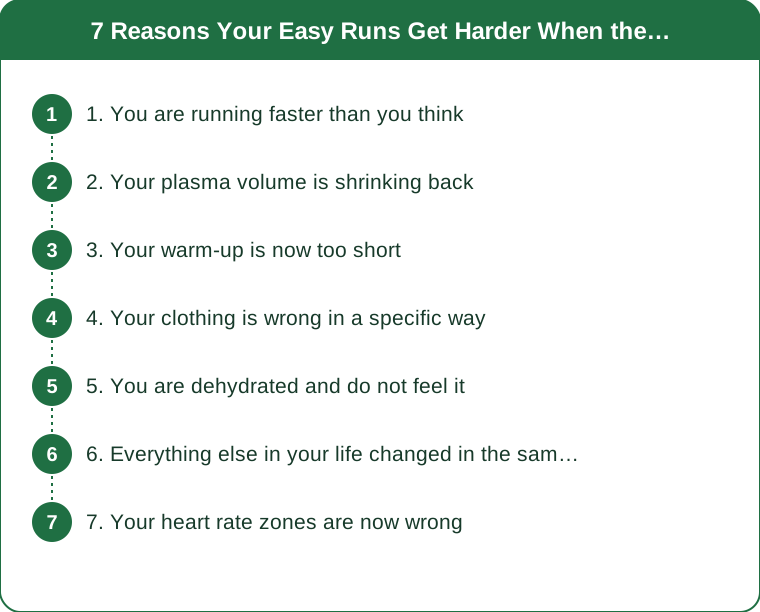
1. You are running faster than you think
This is the biggest one and almost nobody catches it in the moment.
In heat, your body applies a brake. Perceived effort rises early, and you slow down without deciding to. In cool air that brake comes off, and most runners speed up 15 to 30 seconds per mile on easy days without any intention to — the air feels good, the first mile flows, and the pace drifts.
Then you are three miles into a run that is no longer easy, feeling like an easy run has become hard. It has. You made it hard.
The fix is one glance at your watch in the first half mile. If your easy pace is faster than it was two weeks ago and you did not plan that, slow down. The fitness gain from cool weather is real, but it arrives after adaptation, not on day one.
2. Your plasma volume is shrinking back
Heat training expands blood plasma volume — commonly by 5 to 10% over a summer. That extra fluid is a genuine performance asset: more blood volume means more stroke volume, which means a lower heart rate at any given pace.
When the temperature drops, you lose that adaptation faster than you gained it. Plasma volume starts contracting within days of reduced heat exposure, and the decay is largely done in a couple of weeks.
So for a short window you have the worst configuration available: no longer heat-adapted, not yet cold-adapted, running with less blood volume than you had in August. Heart rate at easy pace goes up, effort goes up, and it feels like lost fitness.
It is not lost fitness. It is a transient plumbing change, and what replaces it — dramatically better heat dissipation at the same effort — is worth more than what you gave up.
3. Your warm-up is now too short
In 85°F air you are essentially pre-warmed. Muscle temperature at the start of a run is already close to working range, tendons are compliant, and the first mile can be genuinely easy.
At 50°F, muscle temperature starts several degrees lower. Enzyme activity is slower, tendon stiffness is higher, and the first 10 to 15 minutes of the run are doing the job your July warm-up did in three.
That is exactly why the run feels hard early and better later — a pattern most runners describe as taking longer to get going. It is not a mystery, it is thermodynamics.
The fix costs nothing: 5 to 8 minutes of walking or drills before you start the clock, plus accepting that the first mile of a cool-weather run is part of the warm-up rather than part of the workout.

4. Your clothing is wrong in a specific way
The cool-weather mistake is not underdressing. It is overdressing for the first mile and then being stuck with it for the next six.
The standard guidance — dress for about 15 to 20°F warmer than the actual temperature — exists because you generate a lot of heat once you are moving. Get it wrong and you spend the whole run slightly overheated, which raises heart rate and perceived effort just as effectively as actual hot weather does.
The other clothing issue is sneakier: a long-sleeve base layer that traps a thin humid layer against your skin stops evaporative cooling from working properly. You are, functionally, running in humidity you brought with you.
Practical version: you should be mildly cold for the first five minutes. If you are comfortable at the door, you are overdressed.
5. You are dehydrated and do not feel it
Thirst drive drops measurably in cool air. Sweat evaporates instead of pooling, so you get no visual feedback. Meanwhile sweat rate at a given effort barely changes.
The combination means fall is where quiet chronic dehydration lives. A 2% body-mass fluid deficit raises heart rate by roughly 5 beats and perceived effort noticeably, which is exactly the symptom pattern people blame on lost fitness.
Check it directly: weigh yourself before and after a run once. Every pound lost is about 16 oz of fluid you did not replace. If you are consistently down two pounds after a 45-minute run in cool weather, you have your answer.
Drink on schedule rather than on thirst through September and October, and pay attention to sodium — cooler air does not reduce what you lose in sweat.
6. Everything else in your life changed in the same two weeks
This is the reason that never appears in running articles and is frequently the actual cause.
Late August and early September bring back-to-school schedules, the return of commuting patterns, the end of the summer sleep-in, ragweed season at its peak, and the first household virus circulation of the year. Sunrise is sliding later by about a minute a day, which quietly shortens sleep for anyone who wakes with light.
Any one of those raises resting heart rate and lowers running economy. Three of them at once will make a genuinely easy pace feel like tempo work, and no amount of analyzing your training log will find it.
The diagnostic question is not what changed in my running. It is what changed in my week. If the answer includes less sleep, more allergens, and a schedule shift, your legs are fine.
7. Your heart rate zones are now wrong
If you train by heart rate, your zones were calibrated on summer data — with expanded plasma volume, heat-elevated heart rate, and heat-suppressed pace.
During the transition those boundaries are wrong in an unhelpful direction, and if you obey them strictly you will run every easy day too slow, get no stimulus, and then feel flat, which reads as fitness loss and starts the cycle over.
Run by pace or by feel for seven to ten days. Then, once your morning resting heart rate has settled back to a stable number for three consecutive days, recheck your easy-pace heart rate.
Most runners find it has dropped 5 to 10 beats at the same pace. That is the fall bonus arriving, and it means your zone boundaries need to move down — which usually means your easy runs get a little faster and your threshold work gets noticeably better.
This is general information, not medical advice — if the elevated effort persists past two weeks or comes with chest symptoms or breathlessness at rest, get it checked.
TL;DR:
- The most likely cause is simply running faster than planned because the air feels good — check your pace in the first half mile.
- Plasma volume contracts within days of cooler weather, temporarily raising heart rate at every pace.
- Double your warm-up; cold muscle needs 10 to 15 minutes, not 3.
- Dress to be slightly cold at the door, and hydrate on a schedule since thirst drive drops in cool air.
- Non-running life — sleep, allergens, schedule — changes in exactly these two weeks and explains more than most training logs do.
- Give it 7 to 10 days, then recheck heart rate zones; expect a 5 to 10 beat improvement at the same pace.
The worst two weeks of the running year are immediately followed by the best two months. Hold on.
Keep Reading
This article is for general informational purposes only and is not medical advice. It is not a substitute for professional diagnosis or treatment. Always consult a qualified healthcare provider about your individual situation, especially before making significant changes to your diet or exercise routine.