7 Running Adjustments for the First Cool Mornings of the Year
Quick Answer: Cooler air makes the same effort produce faster paces, which is genuinely earned - but it also means longer warm-ups, different layering, and more caution about jumping straight into the harder training the improved paces tempt you into. Add 5 to 10 minutes to your warm-up, dress for the temperature plus about 10 degrees, and resist rewriting your paces for at least two weeks.
The first cool morning after a hot summer feels like a fitness breakthrough. Some of it is. Some of it is the weather taking credit for your work.

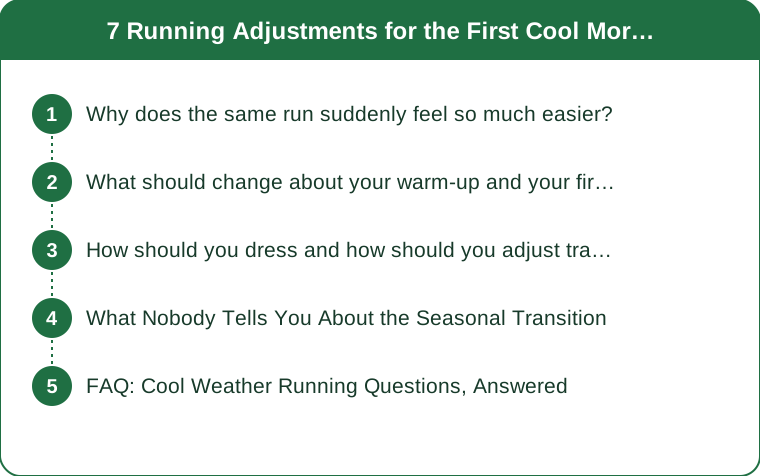
Why does the same run suddenly feel so much easier?
Two mechanisms, and one of them is genuine fitness that was hidden all summer.
1. Your body stops spending effort on cooling
In heat, a large share of your cardiac output is diverted to the skin to dump heat. That blood is not available to your working muscles, so heart rate climbs at any given pace - the well-documented cardiac drift that makes summer easy runs feel like tempo runs. Drop the temperature 10 degrees and that diversion shrinks dramatically. Same effort, more blood to the legs, faster pace. Nothing about you changed overnight; the tax was lifted.
2. Summer heat training left real adaptations
This part is earned. Training through heat increases plasma volume, improves sweat efficiency, and generally produces cardiovascular adaptations that persist for a few weeks once the heat is gone. Runners who trained consistently through a hot summer frequently record personal bests in the first cool weeks, and the effect is real. It also fades over roughly two to four weeks if the stimulus is gone, so it is a window rather than a new baseline.
The practical consequence of both: your perceived effort is now a poor guide to your actual training load. A run that feels easy may be 20 seconds per mile faster than your usual easy pace, which over a week is a meaningful increase in stress applied to tissues that have no idea the weather changed.
What should change about your warm-up and your first mile?
3. Add 5 to 10 minutes to the warm-up
Cool air means cooler muscles and connective tissue at the start of a run. Tissue that is cooler is stiffer and less compliant, and the first mile is where most of the early-season strains happen. In summer you could walk out the door and start running; in autumn that same approach is asking for a calf or hamstring complaint.
What to add: five minutes of brisk walking or very easy jogging before you consider the run started, then leg swings, walking lunges, and a few strides once you are moving. Total additional time, about eight minutes. It is the cheapest injury insurance available at this point in the year.
4. Treat the first mile as part of the warm-up, not the run
Especially for morning runners. Overnight your tissues have been still and cool, and the first mile out the door on a 10-degree morning is not a real representation of anything. Run it slowly and stop looking at the watch for it. Runners who judge the whole session by mile one in autumn end up either discouraged or pushing too early - both bad.
A useful reframe: your first mile in October should feel slower than your first mile in July, even though your last mile will be faster. That is the shape of a well-executed cool-weather run.

How should you dress and how should you adjust training?
5. Dress for the temperature plus about 10 degrees
The standard rule and it holds up: dress as though it is roughly 10 degrees Celsius warmer than the thermometer says, because you will generate that much heat within 10 minutes. If you are comfortable standing outside before you start, you are overdressed.
The more useful version is about what rather than how much. A light long-sleeve top you can push up beats a heavy one you have to remove. Gloves matter more than a jacket for most people, because hands lose heat fast and cold hands are what actually makes a run miserable. And a thin layer over the ears buys more comfort per gram than anything else you can wear.
6. Do not rewrite your training paces for two weeks
This is the important one. The temptation is immediate - you ran a workout 15 seconds per mile faster at the same effort, so surely the whole plan should shift. Resist it for two weeks. Some of that improvement is weather, some is heat adaptation that will fade, and locking in faster paces on the basis of one cool week is how people arrive at October running paces they cannot sustain by November.
After two weeks of consistent cool conditions, recalculate from an actual time trial or race rather than from a good Tuesday.
7. Watch the volume creep
Everything feels better, so runs get longer without a decision being made. A 5-mile easy run becomes 6.5 because the weather was nice. Do that four times a week and you have added 20 percent volume in a week without noticing. Cap it deliberately - decide the distance before you leave, and let the improved conditions show up as faster paces rather than extra miles.
What Nobody Tells You About the Seasonal Transition
Your hydration needs drop less than you think. Cool air suppresses thirst and reduces visible sweating, but you are still losing fluid - and dry autumn air increases respiratory water loss. Runners routinely arrive at October mildly dehydrated because they stopped drinking on the summer schedule and never replaced it with an autumn one. Keep drinking to a schedule for a couple of weeks rather than to thirst.
The injury spike is real and it is early. Clinics see a bump in calf strains, Achilles complaints, and hamstring issues in the first three weeks of genuinely cooler weather. The mechanism is exactly the combination described above: faster paces, colder tissue, shorter warm-ups left over from summer habits. It is one of the most predictable injury windows in the running year and one of the most avoidable.
Your heart rate zones shift, and your watch does not know. Heart rate at any pace drops in cool weather. If you train by heart rate zones, you will find yourself needing to run faster to reach the same zone - which is correct, and which also means the zone is now demanding more mechanically than it was in August. Effort-based training handles this transition better than zone-based training does.
Darkness arrives faster than the cold does. The temperature change is gradual; the loss of evening light is not. Runners who train after work frequently find the season change hits their schedule before it hits their thermometer. Sort out lights and reflective gear before you need them, not on the first evening you get caught out.
Two weeks of feeling superhuman is normal. Then it settles. The plateau after the initial jump is not lost fitness - it is the heat adaptation fading while your true fitness stays exactly where it was. Expect it, and do not respond by training harder.
FAQ: Cool Weather Running Questions, Answered
How much faster should I actually expect to run?
In the range of 10 to 25 seconds per mile at the same effort, moving from hot and humid conditions to cool and dry ones. Bigger for longer efforts, since heat penalties compound with duration, and bigger for people who suffer more in heat to begin with.
Should I still be doing heat training to keep those adaptations?
Only if you have a specific hot race coming up. For everyone else, the adaptations fade and that is fine - you got the benefit during the summer, and chasing them with a sauna in October is effort better spent on the training itself.
Is cold air actually bad for your lungs?
For most people, no. Cold dry air can trigger bronchoconstriction in people with asthma or exercise-induced symptoms, and breathing through a buff or light face covering helps by warming and humidifying the air. If you get significant wheezing or chest tightness in cold air, that is worth discussing with a doctor. This is general information, not medical advice.
When do I need to change shoes for the season?
When the surfaces change, not when the temperature does. Wet leaves and early frost reduce traction well before winter conditions arrive, and that is the point at which a shoe with more aggressive grip earns its place. A dry cool morning is the same running surface as a dry warm one.
TL;DR:
- Cooler air removes the cooling tax on your cardiac output, so the same effort produces faster paces - plus you may be carrying real heat adaptations for a few more weeks.
- Add 5 to 10 minutes of warm-up and treat the first mile as part of it. Cold tissue is where the early-season injuries come from.
- Dress for the temperature plus 10 degrees, and prioritize hands and ears over a heavy jacket.
- Do not rewrite your training paces for two weeks, and do not let easy runs quietly get longer.
- Expect the superhuman feeling to settle after a fortnight. That is the heat adaptation fading, not fitness lost.
The weather is handing you free speed right now. Take it as a gift, not as a mandate to train harder.
Keep Reading
This article is for general informational purposes only and is not medical advice. It is not a substitute for professional diagnosis or treatment. Always consult a qualified healthcare provider about your individual situation, especially before making significant changes to your diet or exercise routine.