7 Running Recovery Mistakes That Are Quietly Slowing Your Progress
Quick Answer: The most common running recovery mistakes are running through nagging pain, skipping protein after long runs, and never scheduling a true easy week — each one compounds quietly until it shows up as an injury or a stalled progress plateau.
Training mistakes get corrected fast because they show up in a bad workout. Recovery mistakes take weeks to show themselves, which is exactly why they’re so easy to repeat.

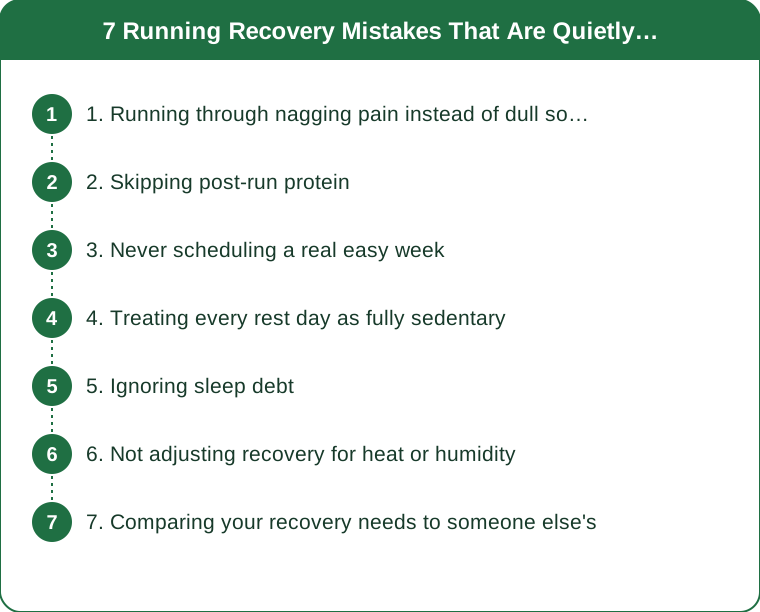
1. Running through nagging pain instead of dull soreness
Muscle soreness and joint or tendon pain feel different, and treating the two the same is a common, costly mistake. Dull, symmetric muscle soreness is normal; sharp, one-sided pain that changes your gait is a signal to stop, not push through.
2. Skipping post-run protein
Carb refueling gets most of the attention after a long run, but protein within a couple hours matters just as much for repairing the muscle fiber breakdown that running causes, especially after long or hard efforts.
3. Never scheduling a real easy week
Continuous training without a planned lighter week, even for dedicated runners, eventually catches up as fatigue that doesn’t respond to a single rest day. A cutback week every 3-4 weeks (roughly 20-30% less volume) prevents this from building up unnoticed.

4. Treating every rest day as fully sedentary
Complete inactivity on rest days can slow recovery by reducing blood flow to fatigued muscles. A short walk or gentle mobility session on rest days often speeds recovery more than doing nothing at all.
5. Ignoring sleep debt
Consistently getting 6 hours instead of 7-8 doesn’t just affect how you feel — it directly slows the muscle repair processes that happen predominantly during deep sleep. Runners chasing performance often overlook this as a training lever.
6. Not adjusting recovery for heat or humidity
A run in hot, humid conditions taxes the body more than the same pace and distance in cool weather, yet most runners recover from a hot run the same way they’d recover from a cool one — under-hydrating and under-resting relative to the actual physiological cost.
7. Comparing your recovery needs to someone else’s
Recovery capacity varies significantly by age, training history, and even genetics. Copying a training partner’s recovery routine exactly, rather than adjusting for your own signals, is a subtle but common way overtraining creeps in.
TL;DR:
- Learn to distinguish normal soreness from pain that signals injury
- Prioritize post-run protein, not just carbs
- Build in a real cutback week every 3-4 weeks
- Adjust recovery — hydration, rest — for heat and humidity, not just distance
Pick the one mistake on this list that sounds most familiar and fix just that one first — recovery habits compound faster than people expect.
Keep Reading
This article is for general informational purposes only and is not medical advice. It is not a substitute for professional diagnosis or treatment. Always consult a qualified healthcare provider about your individual situation, especially before making significant changes to your diet or exercise routine.