7 Signs Your Easy Runs Are Not Actually Easy
Quick Answer: Most runners run their easy days about 20 to 40 seconds per mile too fast, which is just fast enough to accumulate fatigue and just slow enough to feel virtuous. Easy should sit at roughly 65 to 75 percent of maximum heart rate, at a pace where you can speak in full sentences, and it will feel almost embarrassingly slow at first. If your easy runs and your steady runs are within a minute per mile of each other, you do not have two paces - you have one, and it is grey.
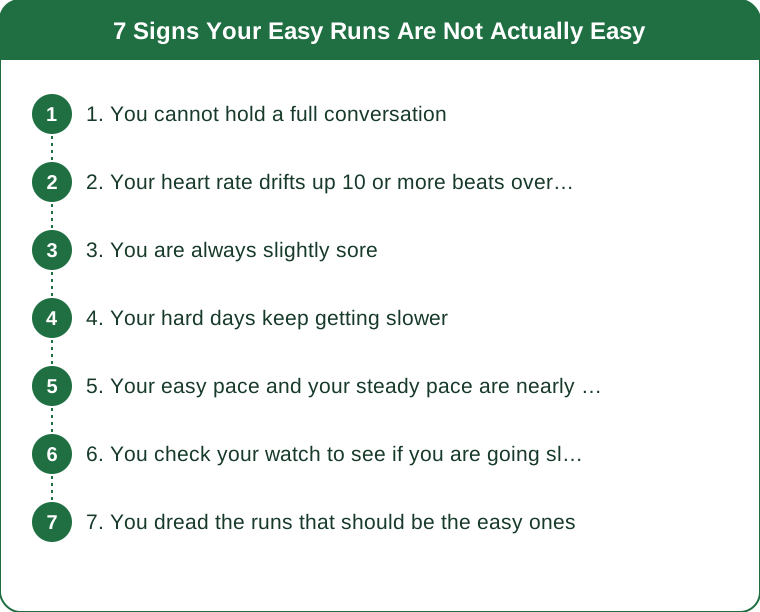
The seven signs below are the ones runners recognise instantly, in roughly the order they show up.

1. You cannot hold a full conversation
This is the oldest test and it survives because it works.
The standard is full sentences, not single words. If you can say yes and no comfortably but a three-clause sentence leaves you gulping, you are running steady, not easy. The physiological reason is that the point where speech starts breaking down tracks reasonably well with the first ventilatory threshold - almost exactly where the easy zone ends.
How to test it honestly when running alone: recite something out loud for 20 seconds - a phone number, a shopping list, anything. If you need to breathe mid-sentence in a way that would be awkward on a phone call, slow down. Runners consistently overestimate their ability to talk until they actually try it.
The most common objection is that slowing down feels like it is not worth doing. It is - the aerobic adaptations that easy volume produces, capillary density and mitochondrial development among them, are driven by time spent, not by pace held.
2. Your heart rate drifts up 10 or more beats over the run
Cardiac drift is normal. The size of it tells you something.
On a genuinely easy run of 45 to 60 minutes in moderate conditions, your heart rate might climb 5 to 8 beats from start to finish as core temperature rises and blood volume shifts. That is expected and harmless.
A drift of 10 to 15 or more beats at a constant pace means the effort was above easy from the beginning. You started in the right zone by the numbers and spent the run climbing out of it.
A practical check: compare your first 10 minutes to your last 10 minutes at the same pace on flat ground. If the gap is large and you were not running in heat, the pace was wrong. In hot or humid weather the drift is larger for everyone, which is exactly why easy pace should slow noticeably in summer - the same effort in 28C humidity is 20 to 45 seconds per mile slower, and holding your cool-weather pace turns every easy run into a moderate one.
3. You are always slightly sore
Not injured. Not properly sore. Just never quite fresh.
This is the single most reliable symptom of chronic too-fast easy running, and it is easy to dismiss because nothing hurts enough to complain about. Legs feel a bit heavy in the first mile of everything. Stairs are slightly noticeable. You never have a day where running feels genuinely springy.
What it means: you are living at the fatigue level where you are recovering from the last run right up until the next one, and never getting past that into adaptation. Easy days are supposed to leave you fresher than they found you, which sounds impossible and is the entire point - increased blood flow and gentle loading without meaningful damage.
The test is simple and brutal. Take your easy pace down by 45 seconds per mile for two weeks. If the low-grade heaviness lifts, it was never a fitness problem.

4. Your hard days keep getting slower
This is the sign that persuades people, because it is the one that costs them.
The pattern goes like this. Easy days creep faster over a few months. Hard days start to feel harder at the same paces, then the paces start slipping. The instinct is to conclude you are losing fitness and to push harder on the hard days, which makes everything worse.
What has actually happened is that your easy days are consuming the recovery your hard days depend on. In a well-structured week the intensity distribution is roughly 80 percent easy, 20 percent hard - and the 80 percent only functions as recovery if it is genuinely easy.
The diagnostic: look at your last eight weeks. If your easy pace has drifted 15 seconds faster and your interval pace has drifted 10 seconds slower, that is not two trends. It is one.
5. Your easy pace and your steady pace are nearly identical
Open your log and compare a recovery run with a moderate long run. If they are within 45 to 60 seconds per mile of each other, you have collapsed two zones into one.
This is sometimes called the grey zone, and it is genuinely the least productive place to spend training time - too hard to be recovery, too easy to drive top-end adaptation. It feels productive, which is why runners live there.
Rough spacing on a properly separated week, using marathon pace as the anchor:
- Easy: 1 minute 30 seconds to 2 minutes 30 seconds per mile slower than marathon pace
- Steady or long-run pace: 45 to 90 seconds slower
- Threshold: 15 to 25 seconds faster
If every run you do sits inside a 60 second band, the plan on paper has three intensities and your legs are only seeing one.
6. You check your watch to see if you are going slowly enough
This one is about behaviour, not physiology, and it is the tell that gives away the underlying problem.
If slowing down requires constant monitoring, you are fighting your own pace rather than settling into it. A genuinely easy run should be the pace you drift to when you stop thinking about it - if you have to police it every 90 seconds, the effort you are aiming for is not the effort your body is choosing.
What actually works better than watch discipline:
- Run some easy runs with no watch at all and let effort choose the pace, then look at the result afterwards
- Run with someone slower and talk the whole way
- Run a hilly route by effort rather than pace, which forces the adjustment automatically
- Nose-breathe the first 15 minutes, which caps your intensity fairly effectively
The goal is not slow numbers. It is a run you do not have to manage.
7. You dread the runs that should be the easy ones
Recovery days should be the ones you look forward to. When they are not, something is off.
Persistent reluctance about easy runs specifically - not about training in general - is a fatigue signal, and it tends to show up before the physical symptoms get obvious. The run you are dreading is not a 45 minute jog; it is 45 minutes at an effort your body already knows it cannot afford.
Other things that travel with it: resting heart rate up a few beats over a week, sleep getting lighter, appetite going strange, minor niggles that come and go. Any one of them alone means little. Three together means back off for a week rather than pushing through.
What nobody tells you: the runners who improve most consistently are usually the ones whose easy days look almost lazy from the outside. Slowing down is the change that most often produces a faster race, and it is the hardest one to make because it looks like doing less. It is not doing less. It is putting the work where it counts.
TL;DR:
- Easy means full sentences out loud, roughly 65 to 75 percent of max heart rate
- Heart rate drift over 10 beats, permanent low-grade soreness, and slipping hard days all point the same way
- If easy and steady sit within a minute per mile, you have one pace, not two
- Slow easy pace 20 to 45 seconds per mile in heat and humidity - same effort, different number
- Needing to police your pace with a watch is itself a sign the effort is wrong
Try two weeks at genuinely easy - the slow-enough-to-feel-silly version - and check what happens to your hard days. Almost everyone who does this reports the same thing: the intervals come back first, and they come back quickly.
Keep Reading
This article is for general informational purposes only and is not medical advice. It is not a substitute for professional diagnosis or treatment. Always consult a qualified healthcare provider about your individual situation, especially before making significant changes to your diet or exercise routine.