7 Signs Your Running Pace Strategy Is Working Against You
Quick Answer: If your first mile always feels ‘too easy,’ you crash after mile 3, or your easy runs aren’t actually easy, the problem is usually pacing strategy, not fitness — these 7 signs point to exactly where the plan is breaking.
A bad run gets blamed on sleep, fueling, or motivation more often than it gets blamed on the actual pacing plan — but for a lot of runners, pacing is the quiet variable sabotaging every other effort.

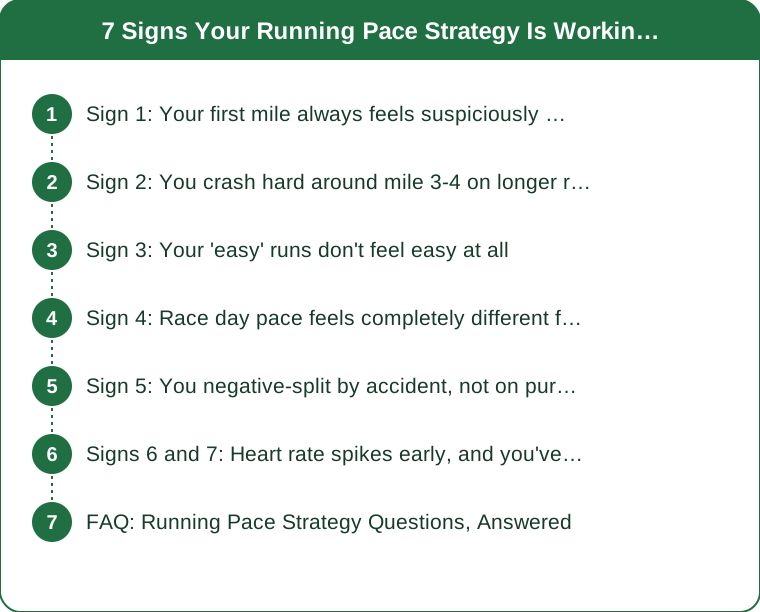
Sign 1: Your first mile always feels suspiciously easy
If mile one consistently feels like you’re barely trying, you’re likely starting too conservatively out of fear of blowing up later — which often leads to overcompensating with a faster back half that isn’t actually sustainable, rather than a smooth, even effort throughout.
Sign 2: You crash hard around mile 3-4 on longer runs
A consistent crash at the same mile marker across multiple runs is a pacing tell, not a fitness tell — it usually means the first few miles were run faster than your current aerobic base supports, borrowing energy from later in the run.
Sign 3: Your ‘easy’ runs don’t feel easy at all
Easy runs should feel conversational — if yours consistently feel like moderate effort, your easy pace is calibrated too fast, which limits the aerobic-building benefit easy running is supposed to provide and adds unnecessary fatigue to your week.

Sign 4: Race day pace feels completely different from training pace
If race-day adrenaline routinely pushes you out faster than any training pace you’ve practiced, you don’t have a rehearsed pace strategy — you have a training pace and a separate, untested race-day pace, which is a common setup for a second-half fade.
Sign 5: You negative-split by accident, not on purpose
An accidental negative split (second half faster than the first) sounds good on paper but usually means the first half was paced too cautiously out of uncertainty, not strategically — meaning you likely left performance on the table rather than executing a plan.
Signs 6 and 7: Heart rate spikes early, and you’ve never run a truly even-paced long run
If heart rate climbs into a hard-effort zone within the first mile and doesn’t settle, the starting pace is outrunning your aerobic capacity from the gun, regardless of what the pace number itself shows on a watch. And if every long run either fades or accidentally negative-splits, you likely don’t have a calibrated sense of your sustainable pace yet — worth deliberately practicing on a dedicated even-pace training run rather than discovering it mid-race.
FAQ: Running Pace Strategy Questions, Answered
How do I find my actual sustainable easy pace?
A simple conversational test works well — if you can speak in full sentences without gasping, you’re in the right range; if you can only manage a few words, slow down.
Is a negative split always the goal?
A slight, intentional negative split is often a good race strategy, but an accidental one usually signals miscalibrated pacing rather than smart execution.
How often should I practice race pace before race day?
Including race-pace segments in training every 1-2 weeks in the final training block helps calibrate what that effort actually feels like before race day adrenaline is added to the mix.
TL;DR:
- Consistent early-mile ease or late-run crashes point to pacing, not fitness
- Easy runs that don’t feel easy limit their own aerobic benefit
- Untested race pace under adrenaline is a common setup for a fade
- Practice even, calibrated pacing deliberately, not just on race day
Fixing the pace plan often fixes more “bad runs” than any fitness change would.
Keep Reading
This article is for general informational purposes only and is not medical advice. It is not a substitute for professional diagnosis or treatment. Always consult a qualified healthcare provider about your individual situation, especially before making significant changes to your diet or exercise routine.