7 Signs You're Overtraining as a Runner (Not Just Tired)
Quick Answer: Overtraining shows up as a cluster of signs, not just soreness: elevated resting heart rate, disrupted sleep despite fatigue, unusual irritability, plateaued or declining performance despite training harder, frequent minor illness, persistent joint aches, and a loss of motivation for runs you used to enjoy. One or two signs alone are normal fatigue; several together for more than a week or two point to real overtraining.
Every runner gets tired after a hard training block — that’s normal and expected. Overtraining is different: it’s a cluster of signals your body sends when recovery has fallen genuinely behind training load.

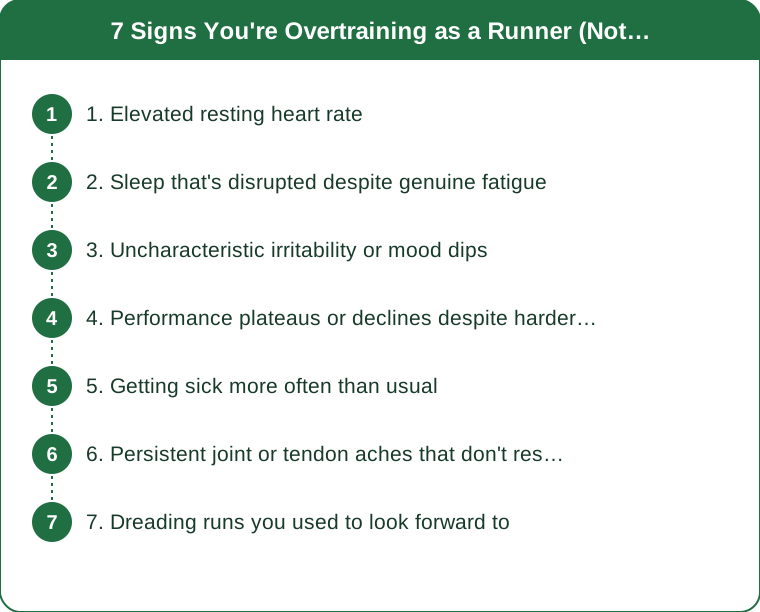
1. Elevated resting heart rate
A resting heart rate that’s 5+ beats per minute higher than your normal baseline for several consecutive mornings is one of the most reliable early overtraining signals, since it reflects your cardiovascular system working harder even at rest to manage accumulated stress.
2. Sleep that’s disrupted despite genuine fatigue
Overtrained runners often report feeling exhausted but sleeping poorly — frequent waking, trouble falling asleep despite tiredness, or waking up not feeling rested. This paradox happens because chronic training stress elevates cortisol, which interferes with normal sleep architecture even when you’re physically depleted.
3. Uncharacteristic irritability or mood dips
Training-related mood changes, irritability, or a flat, unmotivated feeling that doesn’t match your normal personality are a well-documented overtraining marker, tied to the same hormonal and nervous system stress driving the other symptoms on this list.

4. Performance plateaus or declines despite harder training
The clearest paradox of overtraining: running the same or slower paces despite training more. This is your body’s clearest signal that it can’t currently absorb and adapt to the training stress you’re providing — more work is making things worse, not better.
5. Getting sick more often than usual
Overtraining suppresses immune function, so catching colds or minor illnesses more frequently than normal during a heavy training block is a recognized pattern, not bad luck — chronic training stress diverts resources away from immune defense.
6. Persistent joint or tendon aches that don’t resolve with normal rest days
Regular muscle soreness resolves within a couple of days. Joint or tendon discomfort that lingers for a week or more despite normal rest days suggests your body isn’t recovering between sessions the way it should — a sign to scale back before it becomes an actual injury.
7. Dreading runs you used to look forward to
A sudden, persistent loss of motivation for a sport you genuinely enjoy is an emotional overtraining marker that’s easy to dismiss as ‘just a phase’ but is worth taking seriously alongside the physical signs above — motivation loss and physical overtraining frequently travel together.
What should you actually do if several of these apply to you?
Take a genuine reduced-volume week (not zero, necessarily, but meaningfully lighter) rather than pushing through, and prioritize sleep and protein intake during that recovery window.
How long does recovery from overtraining typically take?
Mild cases often improve within 1-2 weeks of reduced volume; more significant overtraining can take 4-6 weeks or longer to fully resolve — patience here prevents a much longer setback later.
Is it possible to have overtraining syndrome without any single symptom being severe?
Yes — this is actually the most common presentation. It’s the combination of several moderate signs, not one dramatic one, that most reliably signals true overtraining rather than normal fatigue.
TL;DR:
- One or two of these signs alone is normal training fatigue — several together for more than a week or two is real overtraining
- Elevated resting heart rate and disrupted sleep despite fatigue are often the earliest, most objective signals
- Performance plateaus despite harder training is the clearest paradox pointing to overtraining specifically
- A genuine reduced-volume recovery week resolves most cases faster than pushing through ever does
Keep Reading
This article is for general informational purposes only and is not medical advice. It is not a substitute for professional diagnosis or treatment. Always consult a qualified healthcare provider about your individual situation, especially before making significant changes to your diet or exercise routine.