7 Quick Fixes for Hill Running, Side Stitches, and the Run-Walk Method
Quick Answer: Running hills well means shortening your stride and leaning slightly from the ankles, not the waist. A side stitch usually eases by exhaling hard on the foot strike opposite the side that hurts. The run-walk method works best as a fixed interval - like 4 minutes running, 1 minute walking - decided before you start, not a reaction to fatigue mid-run.
Three of the most common running frustrations - hills, stitches, and knowing when to walk - all have specific, learnable fixes. Here are 7 of them.

Fix It: 7 Specific Techniques for Hills, Stitches, and Walk Breaks
1. Shorten your stride going uphill
A long stride on an incline overreaches and wastes energy pushing against gravity at a bad angle. Cutting your stride length by roughly 10-20% and increasing your cadence slightly keeps your effort more efficient the whole way up.
2. Lean from the ankles, not the waist
Bending forward at the waist compresses your lungs and rounds your back under fatigue. A slight forward lean that starts at the ankles keeps your torso tall and your breathing open, even on a steep grade.
3. Fix a side stitch by exhaling on the opposite foot strike
If the stitch is on your right side, try exhaling forcefully every time your left foot lands. This changes the rhythm of pressure on your diaphragm and resolves many stitches within a minute or two.
4. Prevent a stitch before it starts
Stitches are more common with a too-full stomach or shallow chest breathing. Waiting 90 minutes after a meal and practicing deep belly breathing during easy runs both lower how often they show up.
5. Use a fixed run-walk interval, not a reactive one
Deciding on a ratio like 4 minutes run, 1 minute walk before you start - and sticking to it regardless of how you feel in the moment - tends to produce faster overall times than walking only when you’re already exhausted.
6. Walk the steepest part of a hill without guilt
Elite runners walk brutally steep sections in ultra events; it’s a strategy, not a failure. Walking a 15%+ grade at a brisk pace can cost you less energy than jogging it slowly while gasping.
7. Practice hills on flat ground first with a treadmill incline
If hills aren’t part of your regular route, a 5-8% treadmill incline lets you build the specific strength and lung capacity hills demand without needing actual terrain nearby.

What Nobody Tells You About Hills, Stitches, and Walk Breaks
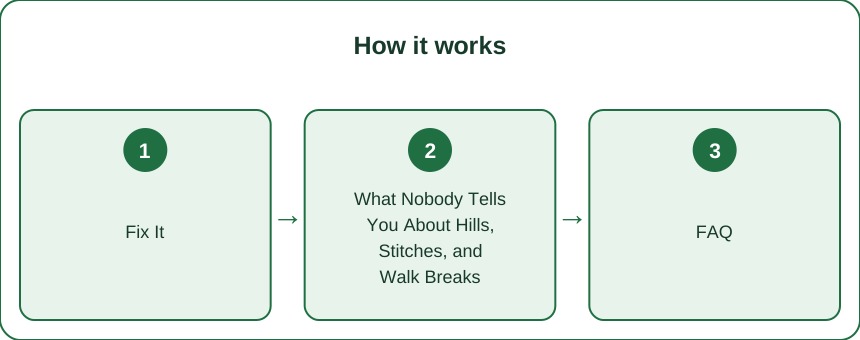
Here’s the part most running advice skips: all three of these ‘problems’ respond better to a plan made in advance than to a decision made while you’re already struggling. Deciding your run-walk ratio, your hill pacing strategy, and your pre-run eating window ahead of time removes the in-the-moment negotiation that usually ends in either quitting early or pushing through poorly.
The surprising one - the one that even some experienced runners get wrong - is that walking strategically on hills is not slower for your overall time in longer runs, and often faster, because you arrive at the top with enough left in the tank to actually run the flat or downhill section that follows.
A side stitch pattern also gets missed by a lot of runners: stitches tend to cluster in the first 20-30 minutes of a run, when your breathing rhythm is still settling and your body hasn’t fully redirected blood flow toward digestion-adjacent organs. If stitches consistently show up later in a run instead, that’s more often linked to dehydration or breathing that’s gotten shallow from fatigue, which calls for a different fix - slowing your pace slightly and taking a few deliberate deep breaths - than the early-run version does.
One more overlooked detail on hills specifically: your arm swing should widen slightly on a steep incline compared to flat ground, since a wider arm swing helps counterbalance the extra hip drive needed to power up the grade, and keeping your gaze slightly downhill rather than straight up at the top of the climb helps you judge footing without straining your neck.
FAQ: Hills, Stitches, and Run-Walk Questions, Answered
Is it normal to still get side stitches even as an experienced runner?
Yes, they can happen at any fitness level, especially with a change in pace, meal timing, or breathing pattern. Frequency usually drops with consistent training but rarely disappears completely.
Should beginners avoid hills altogether?
No - hills build strength and lung capacity efficiently, and walking sections when needed makes them approachable even for new runners.
What run-walk ratio should a beginner start with?
A common starting point is 1 minute running to 1-2 minutes walking, gradually shifting the balance toward more running as fitness builds over several weeks.
Does a side stitch mean something is wrong with my training?
No, an occasional stitch is common at any fitness level and doesn’t indicate poor conditioning - frequent, severe stitches are worth mentioning to a doctor, but the occasional one is simply a normal, fixable running annoyance.
TL;DR:
- Shorten your stride and lean from the ankles on hills, not the waist
- Exhale hard on the foot opposite a side stitch to ease it fast
- Set your run-walk ratio before you start, not mid-run
- Walking a steep hill strategically is a smart move, not a failure
Plan these three ahead of time and they stop being obstacles and start being just part of the run.
Keep Reading
This article is for general informational purposes only and is not medical advice. It is not a substitute for professional diagnosis or treatment. Always consult a qualified healthcare provider about your individual situation, especially before making significant changes to your diet or exercise routine.