The 15-Minute Post-Run Routine That Prevents Tomorrow's Aches
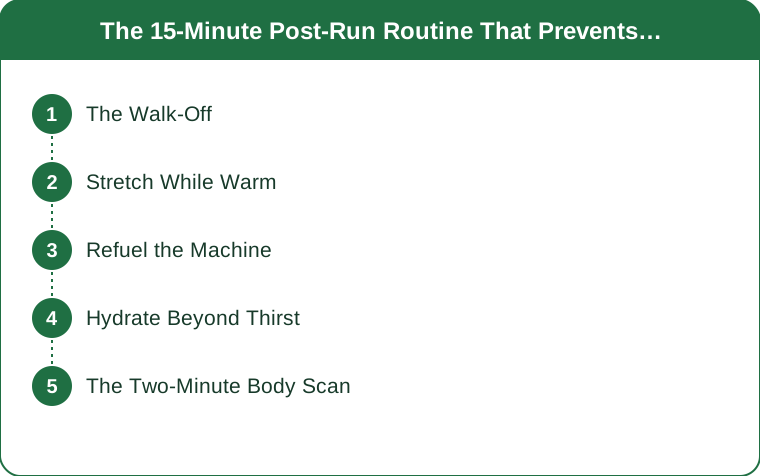
Quick Answer: Five steps, fifteen minutes. Walk 5 minutes instead of stopping cold. Stretch calves, quads, hamstrings, and hip flexors for 30–45 seconds each while you’re still warm. Eat carbs plus protein within an hour. Drink steadily — pale yellow urine is the check. Then do a two-minute body scan for hotspots, tight spots, and grumpy joints. That’s the whole insurance policy against tomorrow’s stairs.
The run ends when you stop the watch. How you feel tomorrow is decided in the fifteen minutes after that.
Most people spend those fifteen minutes standing in the kitchen drinking water and scrolling.
Which is how a perfectly good easy run turns into a stiff calf on Tuesday and a week of “I’ll take a few days off.”

Why shouldn’t you stop running cold?
Because your circulatory system is still running at pace and needs a landing, not a wall.
Walk for five minutes after every run. Your heart rate descends gradually, blood keeps circulating through the working muscles, and the whole system winds down rather than stopping abruptly. It also helps prevent the lightheadedness some people get from stopping hard after a strong effort.
This is the easiest recovery win available. It costs five minutes, it requires nothing, and it’s the step people skip most often because it doesn’t feel like doing anything.
Add it to the run rather than treating it as separate: end your route five minutes from home and walk the rest.
Should you stretch after a run?
Yes — and after is the right timing, which is the part that’s changed in the last decade.
Static stretching before a run can temporarily reduce power output, which is why warm-ups moved toward dynamic movement. But post-run, muscles are warm, blood flow is high, and tissue is genuinely more receptive. This is the window where stretching actually holds.
Four to hit, 30–45 seconds each:
- Calves (both straight-leg and bent-knee, to catch gastroc and soleus)
- Quads
- Hamstrings
- Hip flexors — the most neglected and, for anyone who sits at a desk all day, often the most useful
That’s about five minutes total, and it reliably saves days of the tightness that otherwise accumulates run over run.
Don’t force anything into pain. Stretching to a mild pull is the target; stretching to a wince is how you create the injury you were preventing.

What should you eat after a run?
Something with carbohydrate and protein, within about an hour. That’s the whole rule and it doesn’t need to be complicated.
Carbohydrate restocks the muscle glycogen you just spent. Protein supplies the amino acids for repair. The classic ratio people aim for is roughly 3:1 carbs to protein, but the practical version is “a normal meal or a decent snack.”
Options that work:
- Chocolate milk (genuinely well-studied for this, and it’s just a drink)
- Greek yogurt with fruit and granola
- Eggs on toast
- A real meal, if the timing lines up
The urgency scales with the effort. After an easy 5K, whenever you next eat is fine. After a long run or a hard session, sooner matters more — and it matters a lot if you’re running again within 24 hours.
How much should you drink after a run?
Steadily, and past the point where you stop feeling thirsty — thirst lags behind actual fluid deficit.
The check that works: pale yellow urine within a few hours. Dark means keep drinking; completely clear means you can ease off.
In summer heat, sweat losses climb sharply and you’re also losing sodium, so on hot days or long runs an electrolyte drink or salted food does more than plain water. Dehydrated muscles cramp more, ache more, and recover slower.
A rough guide for a hard or hot session: aim to replace roughly 1.5 times the weight you lost, spread over several hours rather than all at once.
What is the two-minute body scan?
The step that keeps you running for decades instead of seasons.
Spend two minutes deliberately checking in from feet upward. You’re looking for anything that wasn’t there yesterday:
- A hotspot on a foot (a blister forming, or a shoe wearing out)
- A tight IT band or a calf that’s noticeably stiffer on one side
- A knee, ankle, or hip that’s grumbling rather than just tired
Then act while it’s small: ice, roll, adjust a shoe, or take a rest day. Small things stay small only if you address them small. The overwhelming majority of running injuries announce themselves for days or weeks before they stop you.
A note on balance: ordinary muscle soreness after a run is normal and typically peaks 24–48 hours later. See a professional — a physician, physiotherapist, or sports medicine clinician — for pain that’s sharp rather than dull, pain that worsens during a run rather than warming up, pain localized to a specific point on a bone, swelling, or anything that persists beyond a few days of rest. Runners who listen last decades; runners who negotiate get stress fractures.
What Nobody Tells You
- Foam rolling isn’t magic, but it’s pleasant and it works well enough. Evidence for dramatic recovery effects is thin; evidence that it reduces perceived soreness is decent. That’s a reasonable reason to do it.
- The cool-down walk is more valuable than the stretch. If you only have time for one, walk.
- Soreness peaks at 24–48 hours, not immediately. Feeling fine right after a hard run tells you very little about Tuesday.
- Sleep is the biggest recovery lever by a wide margin. Everything in this routine is a rounding error next to a consistent seven or eight hours.
- Changing out of wet running clothes matters more than you’d think. Sitting in them stiffens you up and, in cold weather, drops your core temperature faster than you’d expect.
FAQ
Should you stretch before or after running?
After. Static stretching before a run can temporarily reduce muscle power and hasn’t been shown to prevent injury, so warm-ups are better served by dynamic movement — leg swings, walking lunges, an easy first mile. Post-run is when muscles are warm and the stretching actually holds, which is why the routine belongs at the end.
What’s the best thing to eat after a run?
Anything combining carbohydrate and protein within about an hour — chocolate milk, Greek yogurt with fruit, eggs on toast, or a normal meal. Carbs restock glycogen and protein supports repair. The timing matters most after long or hard sessions, or when you’re running again within 24 hours; after an easy run, your next regular meal is fine.
How do you avoid being sore the day after a run?
Walk for five minutes instead of stopping cold, stretch the calves, quads, hamstrings, and hip flexors while warm, eat carbs and protein within the hour, and hydrate past thirst. Beyond that, soreness is largely a function of how much harder the run was than what you’re adapted to — building mileage gradually prevents far more soreness than any post-run routine can undo.
TL;DR:
- Walk 5 minutes instead of stopping cold. Easiest win, most skipped.
- Stretch calves, quads, hamstrings, hip flexors — 30–45 seconds each, while warm.
- Eat carbs plus protein within an hour; urgency scales with how hard the run was.
- Drink steadily past thirst; pale yellow urine is the check, and add electrolytes in heat.
- Two-minute body scan for hotspots and grumbling joints. Address small things while small.
- Sleep beats every item on this list. The rest is optimization.
- See a clinician for sharp, localized, or worsening pain rather than working through it.
Keep Reading
This article is for general informational purposes only and is not medical advice. It is not a substitute for professional diagnosis or treatment. Always consult a qualified healthcare provider about your individual situation, especially before making significant changes to your diet or exercise routine.