Run-Walk-Run: The Interval Method That Gets Everyone to 5K

Quick Answer: The run-walk method alternates set intervals of running and walking (like 1 minute running, 2 minutes walking) instead of trying to run continuously from day one. It keeps your heart rate in a sustainable zone, dramatically improves adherence for beginners, and it’s a deliberate strategy real marathoners use too — not a fallback for people who “can’t really run.”
You’re 90 seconds into your first jog, lungs burning, legs completely fine, and a tiny voice in your head says walking now means you failed. That voice is wrong, and it’s exhausted more beginner runners than any hill ever has.
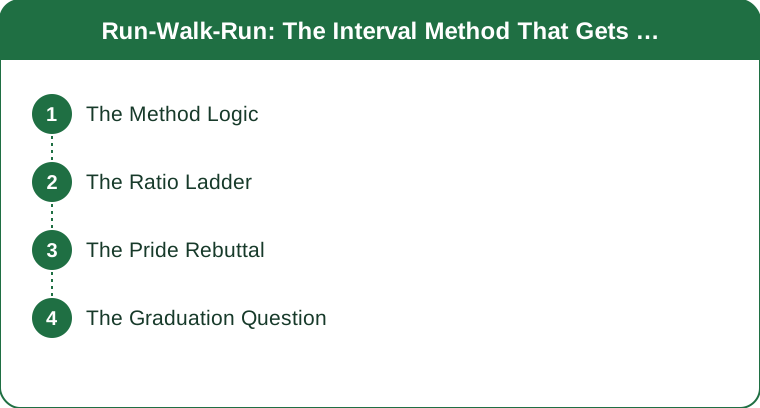
Why Does the Run-Walk Method Actually Work?
Here’s the physiology beginners usually don’t know: your lungs give out long before your legs do. Running continuously keeps your heart rate climbing into a “survival zone” where breathing feels desperate, even though your muscles could keep going. Walking on a schedule resets your heart rate before it gets there.
The result is the same total distance covered, at a genuinely sustainable effort, with dramatically better adherence than trying to grind out continuous running from day one. You finish the workout instead of quitting halfway through it — and finishing is what actually builds the habit.
This matters more than it sounds like it should. A workout you finish and feel okay about is one you’ll happily repeat tomorrow. A workout that leaves you gasping on a curb, wondering why anyone does this on purpose, is one your brain quietly files under “things to avoid.” The run-walk method is really just adherence engineering dressed up as an interval workout.
What’s the Run-Walk Ratio Ladder?
The method starts simple and climbs a rung at a time:
- Week 1: run 1 minute, walk 2 minutes, repeat for 20 minutes total.
- Then progress weekly: 2 min run / 2 min walk, then 3 min run / 2 min walk, then 5 min run / 1 min walk — and onward until the running segments merge into one continuous run.
The ladder is fully adjustable. Stuck on a rung for two or three weeks? Just repeat it — there’s no penalty for taking longer. A watch timer or interval app can handle the counting for you, so your brain is free to enjoy a podcast instead of doing math mid-run.

Is Walking During a Run Actually Cheating?
No — and this is where the pride talk needs a rebuttal. Marathoners use scheduled walk breaks deliberately. It’s a coaching strategy with a genuine competitive pedigree, not a consolation prize for slower runners. Fresh-legged interval runners often finish faster than someone who grinds out the whole distance continuously and burns out at mile 3.
The distinction that matters: walking on schedule is pacing. Walking in defeat is what happens without a schedule. One is strategy, the other is just running out of gas with no plan.
When Should You Stop Run-Walking and Just Run?
Some run-walkers eventually merge into continuous running as their fitness builds. Plenty of others keep intervals forever — at 5K distances and well beyond — because their knees, joints, and overall enjoyment genuinely vote for the mix permanently.
The method was never training wheels you’re supposed to outgrow. For a lot of runners, it’s simply the bike itself — the long-term way they run, not a phase before “real” running starts. There’s no rule that says you owe anyone a continuous run once you’re capable of one; if the mix feels better in your body, that’s reason enough to keep it.
Myth vs Fact: Run-Walk Edition
- Myth: Walking breaks mean you’re not a “real” runner. Fact: Elite marathoners schedule walk breaks deliberately, and interval runners often finish faster than continuous grinders.
- Myth: You have to run continuously to get fitter. Fact: Alternating run-walk intervals cover the same distance at a sustainable heart rate, which is exactly what builds fitness without burning you out.
- Myth: Once you can run continuously, walk breaks are a step backward. Fact: Many experienced runners keep intervals permanently by choice — it’s a legitimate long-term training style, not just a beginner phase.
Mini FAQ
Is the run-walk method only for complete beginners?
No. While it’s a fantastic on-ramp for new runners, many experienced runners — including some marathoners — use scheduled run-walk intervals permanently because it’s easier on their joints and often produces better finish times.
How long should I stay on the same run-walk ratio?
Stay on a rung until it feels comfortable, typically 1-3 weeks, before climbing to the next one. There’s no rush — repeating a level is completely normal and expected.
Will run-walking actually get me to a full 5K?
Yes — that’s the whole design of the ladder. As your run intervals lengthen and your walk intervals shorten week over week, you’ll cover the full 5K distance, often merging into continuous running well before you get there.
TL;DR
- Run-walk intervals keep your heart rate sustainable, so you finish workouts instead of burning out.
- Start at 1 min run / 2 min walk for 20 minutes, then climb the ratio ladder weekly (2/2, 3/2, 5/1…).
- Repeat any rung as many weeks as you need — there’s no penalty for going slow.
- Walking on schedule is pacing, not failure — even marathoners use it deliberately.
- Many runners keep run-walk intervals permanently by choice, well past their first 5K.
Keep Reading
This article is for general informational purposes only and is not medical advice. It is not a substitute for professional diagnosis or treatment. Always consult a qualified healthcare provider about your individual situation, especially before making significant changes to your diet or exercise routine.