7 Things That Actually Change Your Running Cadence (Ranked)
Quick Answer: Cadence isn’t one fixed number everyone should chase — it shifts naturally with pace, terrain, fatigue, and height. The 180 steps-per-minute target is a rough population average, not a personal prescription, and several factors below move your natural cadence more than willpower alone.
The ‘180 is optimal’ claim gets repeated so often it sounds like a rule, but cadence responds to real physical variables — here’s what actually moves the number, ranked by how much it matters.

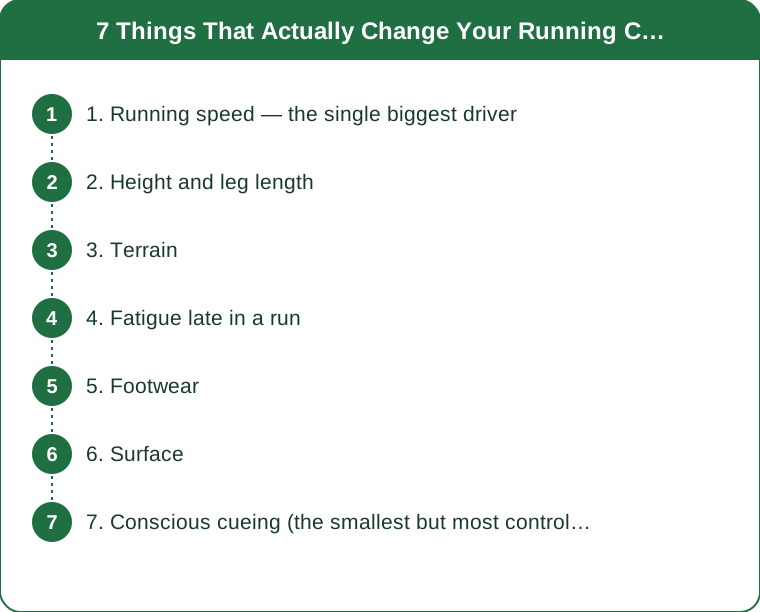
1. Running speed — the single biggest driver
Faster paces naturally increase cadence for most runners, since covering more ground per minute requires either longer strides, faster turnover, or both, and turnover tends to increase first. Comparing your easy-run cadence to your interval-pace cadence and expecting them to match ignores this dominant factor.
2. Height and leg length
Taller runners with longer legs naturally cover more ground per stride and often run efficiently at a lower cadence than the oft-cited 180, while shorter runners frequently sit naturally higher. Chasing a fixed number regardless of your own proportions can push you into an unnatural stride pattern.
3. Terrain
Uphill running typically shortens stride and increases cadence as the body adapts to the incline, while downhill running does the reverse, often lengthening stride and lowering cadence as gravity assists forward motion. Flat-ground cadence numbers don’t translate directly to hilly routes.

4. Fatigue late in a run
As muscles tire, especially late in longer runs, cadence commonly drops as stride length shortens and ground contact time increases — a well-documented marker of fatigue-related form breakdown, not laziness.
5. Footwear
Shoes with more cushioning and a higher stack height can subtly slow cadence by increasing ground contact time, while lighter, firmer shoes tend to be associated with slightly quicker turnover. This effect is smaller than pace or terrain but measurable across shoe changes.
6. Surface
Softer surfaces like trail or grass absorb more energy on push-off, which can lower cadence slightly compared to the same effort on firm pavement, where more of your energy returns predictably with each stride.
7. Conscious cueing (the smallest but most controllable factor)
Deliberately counting steps or running to a metronome can shift cadence by a small amount in the short term, but this effect fades once attention drifts unless it’s practiced repeatedly over weeks. It’s the factor most within your control, but also the one with the smallest natural influence compared to speed or terrain.
TL;DR:
- Pace is the single biggest natural driver of cadence, more than any cue or drill
- Height, terrain, and fatigue all shift cadence in real, well-documented ways
- Footwear and surface make smaller but measurable differences
- Conscious cadence cueing works, but only with sustained practice
Cadence is a symptom of many physical variables working together, not a dial you’re supposed to force to one universal number.
Keep Reading
This article is for general informational purposes only and is not medical advice. It is not a substitute for professional diagnosis or treatment. Always consult a qualified healthcare provider about your individual situation, especially before making significant changes to your diet or exercise routine.