Why Chasing a Higher Running Cadence Number Can Actually Slow You Down
The 180-steps-per-minute cadence target gets repeated as a universal running rule, but forcing that number onto a body it doesn’t fit can actually make running less efficient, not more.

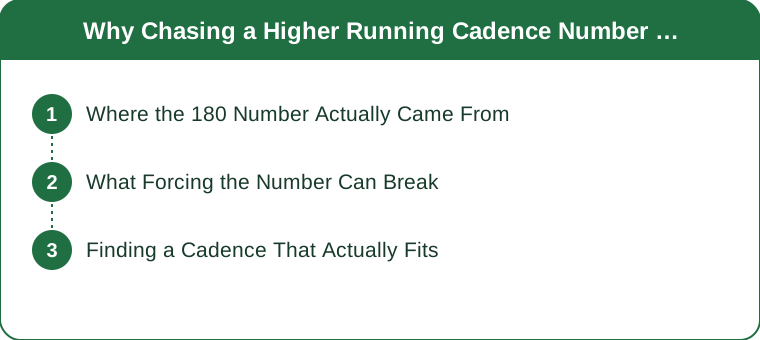
Where the 180 Number Actually Came From
The origin and its limits: the the-elite-athlete-observation-origin (the 180 figure originating from observing elite distance runners at race pace, not from a controlled study proving it’s optimal for every runner at every speed), the the-height-and-leg-length-factor (runners with different leg lengths and heights naturally landing on different efficient cadences, meaning a single universal number ignores basic biomechanical variation), the the-pace-dependency-issue (cadence naturally varying with running pace for any individual runner, meaning a single fixed target doesn’t make sense across easy runs, tempo runs, and sprints).

What Forcing the Number Can Break
The risk of overcorrection: the the-artificial-cadence-increase-cost (artificially increasing cadence beyond a runner’s natural efficient rate requiring shorter, choppier strides that can increase overall energetic cost rather than reduce it), the the-form-disruption-risk (forcing an unfamiliar cadence number often disrupting a runner’s natural, already-efficient form rather than improving it), the the-injury-prevention-oversimplification (cadence increases being popularly framed as an injury-prevention fix, when the actual research support for that specific claim is much more limited and situational than commonly presented).
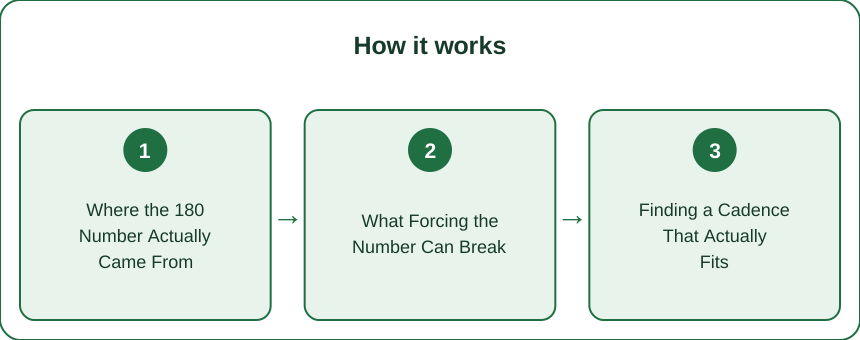
Finding a Cadence That Actually Fits
The self-assessment approach: the the-natural-cadence-baseline (measuring current natural cadence at an easy, comfortable pace as the actual starting point, rather than assuming a deficit against 180), the the-gradual-adjustment-if-needed (making only small, gradual adjustments — a few percent at most — if overstriding or injury patterns suggest a change is actually warranted), and the frame (a runner’s own efficient natural cadence, not a borrowed elite-athlete number, is the one worth building around)).
The 180-steps-per-minute cadence target that circulates through running advice actually comes from observing elite distance runners at race pace, not from a controlled study proving it’s the optimal number for every runner — and runners with different leg lengths and heights naturally land on different efficient cadences, while an individual’s own cadence normally shifts with pace anyway. Forcing an unfamiliar higher cadence can actually increase energetic cost through shorter, choppier strides and disrupt form that was already working, and the popular claim that higher cadence prevents injury has much more limited research support than it’s usually presented with. The better starting point is measuring your own natural cadence at an easy pace and making only small, gradual adjustments if a specific problem like overstriding actually shows up. Why Chasing a Higher Running Cadence Number Can Actually Slow You Down comes down to building around your own efficient number instead of someone else’s.
Keep Reading
This article is for general informational purposes only and is not medical advice. It is not a substitute for professional diagnosis or treatment. Always consult a qualified healthcare provider about your individual situation, especially before making significant changes to your diet or exercise routine.