Running Clothes for Beginners: 7 Things That Actually Matter
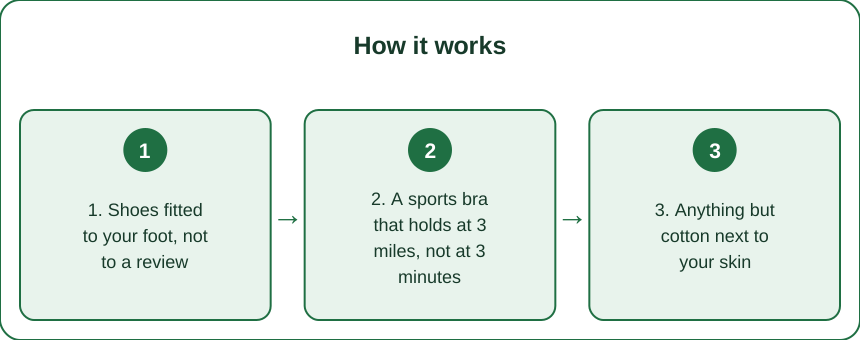
Quick Answer: For beginner running clothes, exactly three things matter: shoes that fit your foot, a bra that actually holds, and non-cotton fabric next to your skin. Everything else — jackets, watches, compression, matching sets — is comfort or preference, not performance. Buy the three, run in whatever you own for the rest, and add pieces only when a specific problem appears.
You can spend $400 before your first mile. You can also spend $120 and be better equipped than the person who spent $400.
The difference is knowing which three purchases change how running feels and which seven are just nice.
1. Shoes fitted to your foot, not to a review
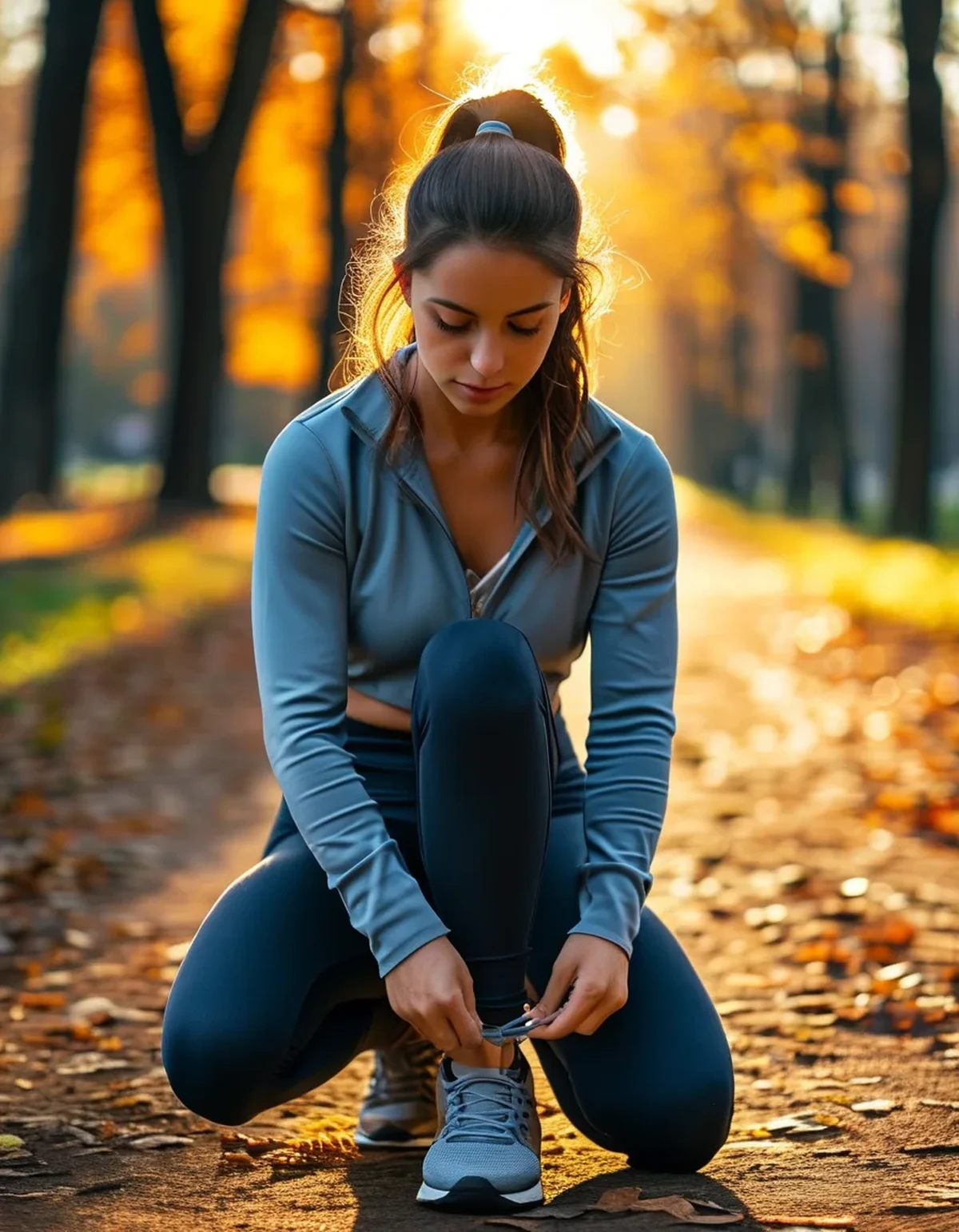
This is the only purchase worth doing carefully, and the only one worth doing in person.
The best shoe in the world is the wrong shoe if it does not fit your foot. Reviews describe how a shoe felt on a reviewer’s foot — different width, different arch height, different gait. That information is close to useless for predicting your experience.
Go up half a size from your street shoe. Feet swell during running, and a shoe that fits perfectly standing still becomes tight at mile two. You want a thumbnail’s width between your longest toe and the front of the shoe.
Shop in the late afternoon. Your feet are measurably larger later in the day, which is closer to their running state.
Ignore stability-versus-neutral debates as a beginner. The current evidence on pronation-correcting shoes preventing injury is much weaker than the marketing suggests. Comfort is the best available predictor — the shoe that feels best on a short in-store jog is usually the right one.
Budget $100 to $160. Below that, midsole foam quality drops noticeably. Above it, you are mostly paying for weight savings that matter to racers and not to you yet.
Replace at 300 to 500 miles, or sooner if your shins or knees start complaining without another explanation.
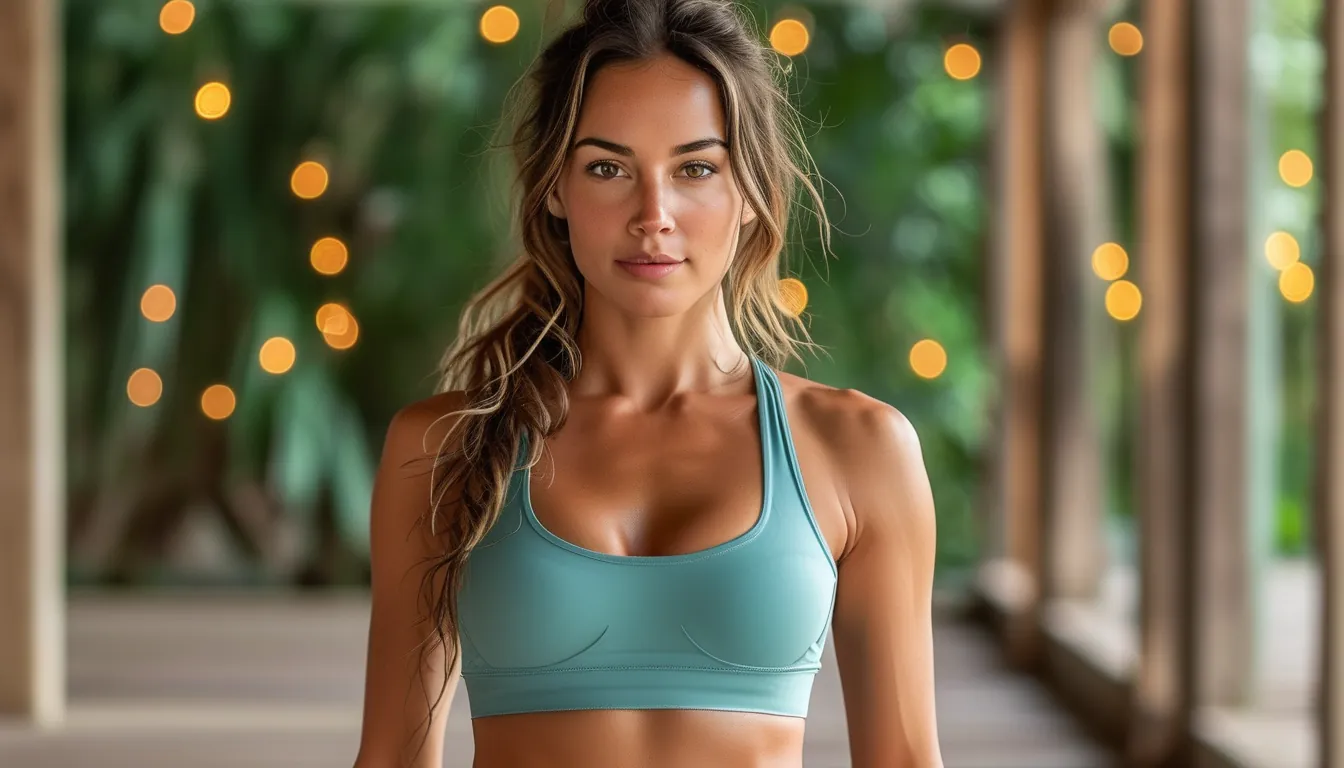
2. A sports bra that holds at 3 miles, not at 3 minutes
This is the piece beginners most often under-buy and most often regret.
Running is the highest-impact common exercise there is. Vertical breast displacement during running is substantially greater than during almost anything else you would do in a gym, and an under-supportive bra makes running uncomfortable in a way that gets blamed on running itself.
Encapsulation beats compression above a C cup. Compression bras flatten; encapsulation bras support each side separately. For larger busts, encapsulation or a combination style is meaningfully more comfortable over distance.
The fit test that works: put it on, jump ten times, then jog in place for thirty seconds. If anything moves in a way you notice, it is not your running bra. Also check the band — about 80% of the support comes from the band, not the straps, and a band that rides up is too loose.
Buy two. One in the wash is the reason people skip runs.
Replace every 6 to 12 months with regular use. Elastic degrades quietly, and most people run in a dead bra for months without connecting it to the discomfort.
3. Anything but cotton next to your skin
This is the cheapest upgrade on the list and the one with the fastest payoff.
Cotton absorbs sweat and holds it. A cotton shirt at mile three weighs more, sits against your skin wet, and creates the friction that causes chafing. Synthetic and merino fabrics move sweat outward so it evaporates instead of pooling.
You probably already own something suitable. Any gym top labeled dri-fit, climalite, or simply polyester works. You do not need running-specific tops to start.
Flat seams matter more than fabric name. The chafe points on a run are the underarm, the bra band line, and the inner thigh. A raised seam at any of those points will find you at mile four, and cost has almost nothing to do with it.
Merino is the underrated option for cool autumn mornings — warmer than synthetic at the same weight and dramatically better at resisting odor across multiple wears.
4. Bottoms you can forget about
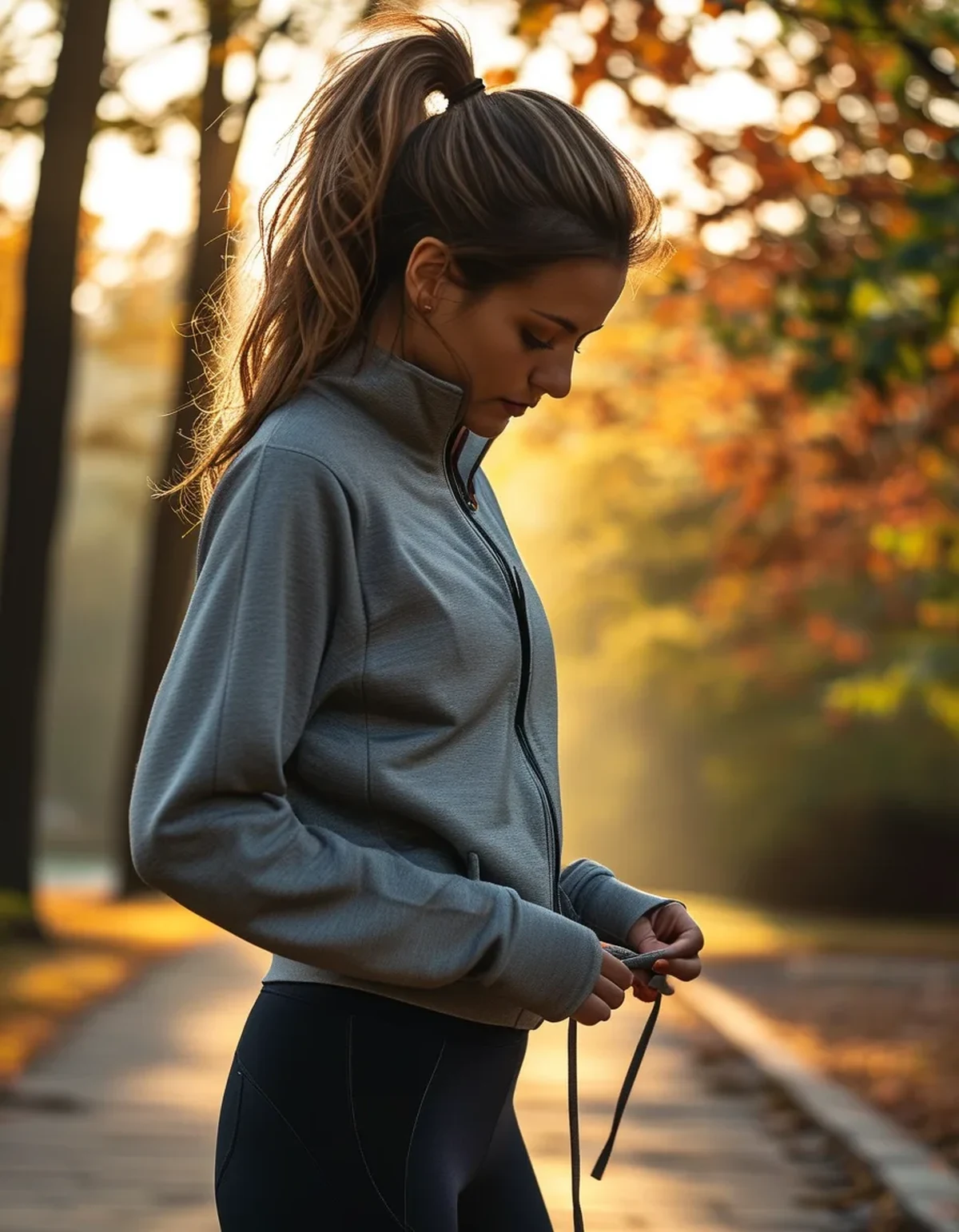
The requirement is that they stay put. A waistband that slides down, shorts that ride up, or a legging that needs hitching every quarter mile turns into a genuine distraction.
A wide, high waistband stays up better than a thin drawstring one for most bodies. Test by doing ten squats and a short jog in the fitting room — if you adjust anything, keep looking.
Shorts versus leggings is temperature and preference, not performance. In the 50 to 65°F range that defines most autumn running, either works. Under about 45°F, a legging is more comfortable.
Inner thigh chafing is a fabric and length problem, not a body problem. A short with a longer inseam, a fitted liner, or a legging solves it. So does anti-chafe balm, which costs about $10 and lasts a season.
One pocket that seals is worth a lot. A phone in a hand for 30 minutes changes your arm carriage and gets old fast.
5 and 6. Socks and being seen in the dark
5. Socks are not a rounding error
Cotton socks are the most common cause of beginner blisters, and almost nobody connects the two.
A wet cotton sock bunches, and a bunched sock plus a moving foot is a blister forming in real time. A synthetic or merino running sock costs $12 to $18 a pair and eliminates most of the problem outright.
Look for a cuff that clears the shoe collar. No-show socks that slip below the heel counter cause a very specific and very irritating rub on the back of the ankle.
Two pairs is enough to start. This is the smallest purchase on the list with the highest complaint-to-cost ratio.
6. Being visible, if you run early or late
In autumn this moves from optional to genuinely important as daylight shrinks on both ends of the day.
Reflective detailing beats bright colors after dark. A neon shirt is invisible at 6pm in November; a reflective strip catches headlights from a few hundred feet. Most running gear has some reflectivity built in — check yours rather than assuming.
A $15 clip-on light or reflective vest covers you regardless of what you are wearing that day, which is more reliable than depending on each garment.
Run facing traffic on roads without sidewalks, and treat the assumption that a driver has seen you as unsafe until proven otherwise.
7. Five Things You Do Not Need Yet
A running watch. Useful eventually, unnecessary now. Your phone tracks distance and pace adequately, and a beginner’s most valuable skill is running by feel rather than by number.
A running jacket. Until it is consistently below 40°F or actually raining, a long-sleeve top plus a light layer you already own is fine. You warm up about 10°F worth within the first mile, which is why experienced runners dress for a day feeling slightly colder than the thermometer says.
Compression sleeves and socks. The performance evidence is mixed at best. Some people like how they feel; that is a valid reason to own them and not a reason to buy them before your first month.
A hydration vest. Under 60 minutes in mild weather, you do not need to carry water. Drink before and after and skip the gear.
A matching set. If it makes you want to go running, it is doing real work — motivation is not fake. Just buy it after the shoes and the bra, not before.
The uncomfortable truth about gear: the person who has been running for five years in a $30 shirt and good shoes is faster and more consistent than the person with a full kit and three weeks of history. Gear removes obstacles; it does not create the habit.
FAQ: Beginner Running Clothes Questions, Answered
How much should I spend total to start?
Around $180 to $250 covers good shoes, one quality bra, and two pairs of running socks — the three purchases that actually matter. Everything else can come from what you already own until a specific problem tells you otherwise.
Do I need different clothes for treadmill versus outdoor running?
Same shoes and same bra. Outdoors you need one more layer than you think for the first mile and one fewer than you think for the rest; indoors you can dress for the temperature exactly.
What do I wear for a 45°F autumn morning?
A long-sleeve non-cotton top, shorts or a legging depending on preference, and a light layer you can tie around your waist. You will feel slightly cold for the first five minutes, which is the correct amount of cold at the start.
Should I buy shoes online?
Buy your first pair in person at a running shop where you can jog in them. Buy your third pair online, in the same model, once you know what fits you.
TL;DR: Three purchases matter. The rest is preference dressed up as necessity.
- Shoes fitted in person, half a size up. Comfort beats every technical claim on the box.
- A bra that passes the jump test, encapsulation style above a C cup, and buy two.
- Nothing cotton against your skin — you likely already own something that qualifies.
- Running socks in synthetic or merino prevent most beginner blisters for under $20.
- Reflective gear if you run in the dark, which in autumn is most mornings and most evenings.
- Skip the watch, jacket, compression, and vest until a real problem asks for them.
Buy the shoes this week, the bra next week, and run in what you own in the meantime. The gear is not what stops people — the second week is.
See It in Motion
Seen here: High Waist Yoga Leggings with Side Pockets — shop it on bubblelime.com
Keep Reading
This article is for general informational purposes only and is not medical advice. It is not a substitute for professional diagnosis or treatment. Always consult a qualified healthcare provider about your individual situation, especially before making significant changes to your diet or exercise routine.