How to Keep Running When It's 90°F: A Hot-Weather Survival Guide
Quick Answer: Run before 8 a.m. or after sunset, pre-hydrate and add electrolytes on anything over 45 minutes, wear light-colored moisture-wicking fabric, and slow your pace by roughly 20-30 seconds per mile for every 10°F above 60°F. Run by effort, not by pace. Stop immediately for dizziness, chills or if you stop sweating.
You laced up, stepped outside, and the heat hit you like a wall. Three minutes in, you’re already questioning several life choices and possibly the entire concept of running.
Summer running is genuinely hard. But quitting until October isn’t the answer, and neither is grinding out your usual paces and wondering why you feel terrible.
The secret isn’t toughing it out. It’s running smarter. Here’s how to keep logging miles when the thermometer is being dramatic.

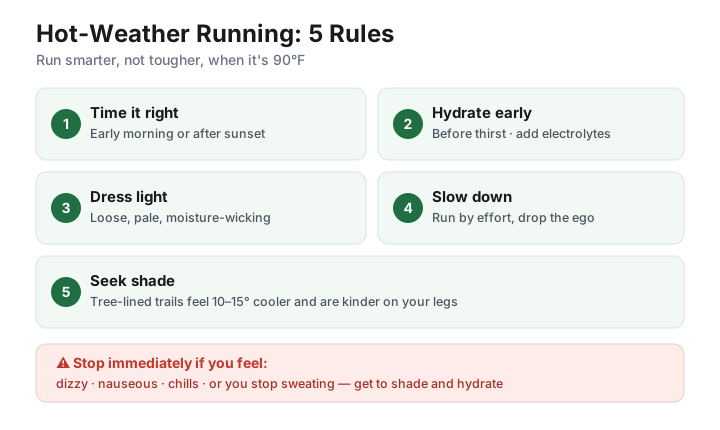
Here are all five rules at a glance — then we’ll dig into each:
Rule #1: Time It Right
This is the big one, and it does more than the other four combined.
Run before 8 a.m. or after sunset — not high noon. A 6 a.m. run and a 1 p.m. run in July are two completely different sports played by two different bodies. Ground temperature on asphalt can run considerably hotter than air temperature, and the radiant heat coming back up at you is a real load your morning self never has to deal with.
Dawn is cooler, quieter and honestly kind of magical. Become a morning runner for the summer, then go back to your ways in the fall.
If you genuinely can’t run early, evening is second best — but note that pavement holds heat for hours after sunset, so a 9 p.m. run on a road is warmer than a 9 p.m. run on grass.
Rule #2: Hydrate Like It’s Your Job
By the time you feel thirsty, you’re already behind.
- Drink 16-20 oz of water in the 1-2 hours before you head out, not just during the run.
- On runs over 45 minutes, add electrolytes. You’re sweating out sodium, not just water, and drinking plain water in large volumes while losing salt is its own problem.
- Carry a handheld bottle or plan a loop route past a fountain — out-and-back with a water stop beats one long loop with none.
- Weigh yourself before and after a long run occasionally. A significant drop is fluid, and it tells you roughly how much you’re actually losing.
Hot-weather sweat rates vary enormously between people. The person next to you might need half what you do, or double. Yours is the only one that matters.
Rule #3: Dress for the Heat
Ditch the cotton. It absorbs sweat, holds it, and turns into a wet weighted blanket.
Light-colored, loose, moisture-wicking fabric reflects heat and moves sweat off your skin so it can actually evaporate — and evaporation is the entire cooling mechanism. Add a cap or visor and sunglasses and you’ve built a portable cooling system.
Two details people skip:
- Sunscreen that survives sweat. Reapply on long runs. Sunburn impairs your ability to cool.
- Chafe protection. Heat plus sweat plus distance equals friction in places you’ll remember. Anti-chafe balm on thighs, underarms and bra lines is not optional in August, and a pair of fitted, sweat-wicking running shorts or high waist leggings that don’t ride up solves most of it structurally.
Rule #4: How Much Slower Should You Run in Heat?
Your body is doing two jobs at once in heat — running, and cooling itself. Blood gets diverted to your skin, your heart rate climbs at any given pace, and your usual effort produces a slower result.
A useful rule of thumb: add roughly 20-30 seconds per mile for every 10°F above about 60°F, and more if humidity is high. At 90°F that’s a substantial adjustment, and it’s the correct one.
Run by effort, not by pace. Drop the ego, cover the watch if you need to. A slower summer run still counts — it counts a lot, and the aerobic adaptation is happening regardless of what the split says.

Rule #5: Seek Shade and Softer Routes
Swap the exposed asphalt loop for a shaded, tree-lined trail. Shade makes a genuine difference — you’re removing direct solar radiation on top of removing hot pavement underfoot.
Softer ground is also kinder to legs already working harder than usual. Bonus: it’s prettier, which makes the miles go faster in the way only scenery can.
Water features help more than you’d think. A route past a fountain, a lake or a shaded creek path gives you both a cooling option and a psychological one.
5 Mistakes Everyone Makes Running in Heat
1. Keeping the same training paces. The most common one. Your goal paces were set in different conditions; insisting on them in 90°F heat is how easy runs become hard ones and hard runs become medical events.
2. Drinking only water on long hot runs. Large volumes of plain water while losing significant sodium can leave you feeling worse, not better. Electrolytes past 45 minutes.
3. Skipping the acclimatization period. Your body adapts to heat over roughly 10-14 days of consistent exposure — plasma volume increases, you start sweating earlier and more efficiently. Jumping straight into hard sessions in a heat wave skips that and it’s the fastest way to a bad experience.
4. Wearing dark, tight, non-technical clothing. Black absorbs. Cotton holds. Both work against evaporation, which is the only cooling you’ve got.
5. Treating “toughness” as a virtue in heat. This is the third mistake that surprises experienced runners: heat illness doesn’t care about your training history or your mental strength. It affects fit people regularly, and the ability to abandon a run is a genuine skill.
Know the Warning Signs — and Stop
This matters more than anything else in this article.
Stop immediately, get to shade and hydrate if you feel:
- Dizzy or lightheaded
- Nauseous
- Chills or goosebumps in the heat
- Headache or confusion
- Skin that has stopped sweating — this one is serious
Those are heat exhaustion signs, and no run is worth ignoring them. When to see a professional: get emergency medical help for confusion, fainting, a body temperature that feels alarmingly high, seizures or skin that’s hot and dry — those point toward heat stroke, which is a medical emergency, not a rest-in-the-shade situation. Talk to your doctor before running in significant heat if you have a cardiovascular condition, take medications affecting fluid balance or sweating, or are pregnant.
Toughness is knowing when to call it.
FAQ
How much slower should I run in hot weather?
A common guideline is 20-30 seconds per mile slower for every 10°F above roughly 60°F, with more adjustment when humidity is high. Running by heart rate or perceived effort rather than pace handles this automatically and is the simpler approach.
How long does it take to acclimatize to running in heat?
Most of the adaptation happens over about 10-14 days of consistent exposure, with meaningful changes appearing within the first week. Start with shorter, easier runs in the heat rather than diving into your usual sessions, and the process is far more pleasant.
Should I run on a treadmill instead when it’s very hot?
It’s a completely reasonable choice, especially during heat advisories or if you have a health condition that makes heat riskier. You’ll lose the heat acclimatization benefit, but you’ll get the training in safely — which is the actual goal.
TL;DR
- Timing beats everything. Before 8 a.m. or after sunset. A 6 a.m. run and a 1 p.m. run aren’t the same sport.
- Pre-hydrate 16-20 oz, and add electrolytes on anything over 45 minutes.
- Light colors, technical fabric, cap, sunglasses, sunscreen, anti-chafe. Cotton is the enemy.
- Slow down 20-30 sec/mile per 10°F above 60°F. Run by effort, not pace.
- Shade and soft surfaces are worth a longer drive to reach.
- Dizzy, nauseous, chills, or not sweating = stop now. Confusion or fainting = emergency help.
Keep Reading
This article is for general informational purposes only and is not medical advice. It is not a substitute for professional diagnosis or treatment. Always consult a qualified healthcare provider about your individual situation, especially before making significant changes to your diet or exercise routine.