Running Solo, Running Smart: The Safety Playbook for Women
Quick Answer: The highest-value solo running safety habit is live location sharing with one trusted person — it takes two minutes to set up once and runs automatically after that. Add a rotation of three to four familiar, well-lit routes rather than one predictable loop, keep one ear free or use open-ear headphones, and give yourself blanket permission to reroute the moment anything feels off, with no explanation owed to anyone.
Every woman who runs carries a second training plan nobody assigned her. Route, time of day, headphones, who knows where I am, is that person behind me or just also going that way.
It runs in the background of every mile and it’s exhausting in a way that has nothing to do with pace.
The point of a safety playbook isn’t fear. It’s the opposite: handle the systems once, in advance, so the run itself gets to be free.

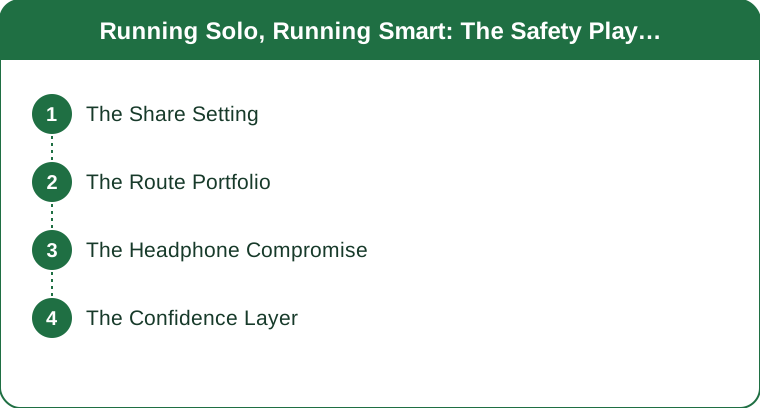
What’s the Single Most Useful Safety Setting?
Live location sharing. Set it up once, use it forever.
Both iPhone and Android share location natively, and most running apps — Strava’s Beacon, Garmin’s LiveTrack, Nike Run Club — have a version built in that sends a link to a chosen contact. The setup takes about two minutes, and after that it’s a toggle.
Pair it with a loose norm rather than a rule: a quick “heading out, back by 7” text to the same person. Not a check-in obligation — a thread. If you’re not back and not answering, someone knows where the dot stopped.
One more setting worth five minutes: put your emergency contact and any medical info in your phone’s Medical ID, which is accessible from a locked screen. And if your watch or phone offers fall detection or an emergency SOS shortcut, turn it on. Most people never touch either menu.
How Should You Choose and Rotate Routes?
The thing to avoid isn’t unfamiliarity. It’s predictability.
Same loop, same time, every single day means anyone paying attention knows exactly where you’ll be and when. Build a portfolio of three or four routes you know well and rotate them, ideally with some variation in start time.
For solo runs, weight the choice toward populated and lit paths — a slightly duller route with people on it beats a beautiful empty one. Save the remote trail for daylight with hours to spare, or for company.
New route? Scout it first: drive it, walk it, or run it the first time with someone. Know where the exits are, where the phone signal drops, and which stretch has no houses for half a mile.

What’s the Right Headphone Compromise?
Fully sealed noise-cancelling earbuds cost you the single sense that gives the most warning. But “just run without music” is advice that gets ignored, because the music is often why the run happens.
So compromise instead:
- One earbud out, ideally the one facing the road.
- Open-ear or bone-conduction headphones, which sit outside the ear canal and leave ambient sound intact. This is the best of the three.
- Volume at conversation level — if you can’t hear your own footfalls, it’s too loud.
Your playlist survives. The footsteps behind you stay audible. Awareness isn’t paranoia; it’s peripheral vision for your ears.
What Nobody Tells You About the Gut Feeling
Here’s the part that deserves saying plainly: you never owe anyone an explanation for rerouting.
Not to the person you crossed the street to avoid. Not to yourself, later, when you’re second-guessing whether it was “really” anything. Not to a friend who might think you overreacted.
The instinct that says turn here processes information faster than the part of your brain that builds a justification for it. Waiting for evidence you can defend in an argument is how people talk themselves past the exit.
Turn early. Cross the road. Duck into the open shop. Change direction and add a half mile. The cost of being wrong is ninety seconds and a slightly weird feeling. The cost of being right and hesitating is not comparable.
Also worth knowing: running tall and alert, head up, scanning — the posture that reads as unpromising to an opportunist — is also just better running form. That one’s free.
Is Running With a Group Actually Safer?
Yes, and it’s the most underrated item on this list.
Almost every town has a weekly group run, usually free, usually attached to a running store or a park. It’s safety infrastructure disguised as brunch planning: numbers on the road, local knowledge about which paths are fine and which aren’t, and a pool of people to run the remote trail with when you want it.
Twice a month in a group makes the other runs better informed, not just the group ones.
Frequently Asked Questions
Is it safe for a woman to run alone at night?
It can be, with the settings stacked in your favor: a lit, populated route you know well, location sharing active, one ear free, and reflective or lit gear so drivers see you — traffic is the more common night hazard, not people. If a route only works in daylight, treat that as information about the route, not a personal failing.
Should I carry pepper spray or a personal alarm?
A personal alarm is small, legal everywhere, needs no training, and works — noise attracts attention, which is what you want. Pepper spray is legal in many places but not all, and it requires you to deploy it correctly under stress. Check your local law, and if you carry either, practice reaching it without stopping.
What should I do if I think someone is following me?
Act early, before you’re sure. Cross the street, change pace, turn toward people or lights, and call someone — out loud, on speaker. If you’re still uneasy, go into any open business. You don’t need certainty to take an exit, and nobody who isn’t following you will notice or care that you did.
TL;DR:
- Turn on live location sharing with one person; it’s two minutes once and the highest-value habit here.
- Fill in Medical ID and enable fall detection / emergency SOS while you’re in the settings.
- Rotate three or four known routes at varying times — predictability is the risk, not unfamiliarity.
- Open-ear headphones or one earbud out; volume at conversation level.
- Reroute on instinct, immediately, with zero justification owed.
- Join a local group run twice a month — it’s safety infrastructure with coffee attached.
Keep Reading
This article is for general informational purposes only and is not medical advice. It is not a substitute for professional diagnosis or treatment. Always consult a qualified healthcare provider about your individual situation, especially before making significant changes to your diet or exercise routine.