Strength Training for Runners: The Two-Session Plan That Prevents and Speeds
Runners resist the gym with reliable arguments — no time, fear of bulk, ‘running is my training’ — while the research keeps repeating: strength work reduces injuries substantially and improves running economy. The runner’s plan: the case, the exercises that transfer and the two-session fit.

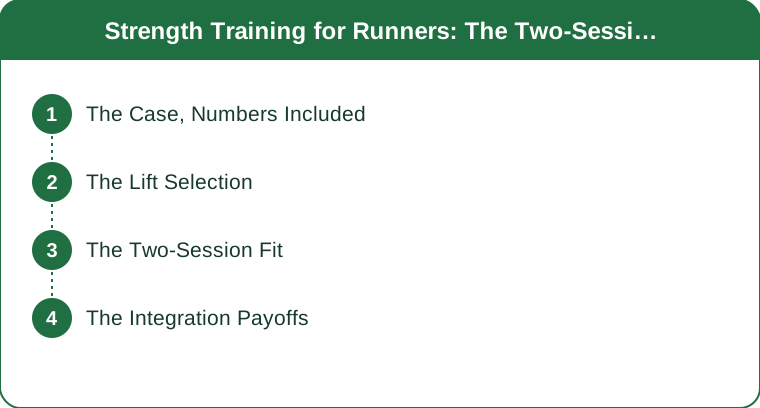
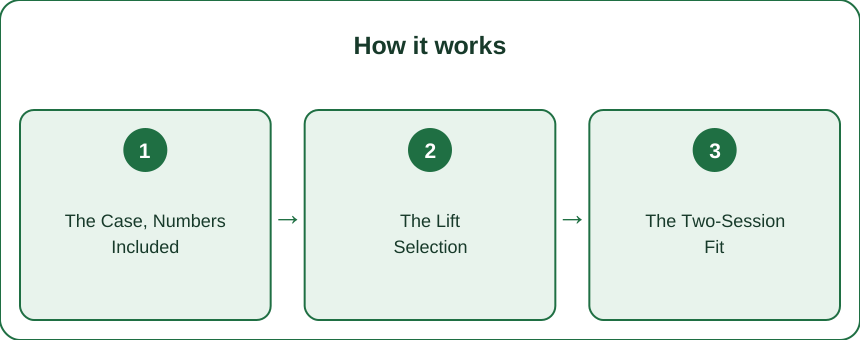
The Case, Numbers Included
Why runners lift: the injury-prevention file (strength training cuts overuse-injury rates dramatically in the research — the strongest injury-prevention intervention running science has; the stretching chapter’s honesty pointed here), the economy improvement (stronger runners use less energy at the same pace — the running-economy studies show real percentage gains from strength blocks; free speed, gym-purchased), the durability translation (the late-race form that holds — the glute-and-core endurance from the glutes chapter; the marathon’s last 10K is a strength event), and the bulk myth retirement (the twice-weekly runner’s-strength plan builds resilience, not mass — the bulk requires eating-and-training dedication runners aren’t accidentally doing; the fear costs more than the barbell ever would).
The Lift Selection
The exercises that transfer: the single-leg priority (the split-squat, step-up and single-leg deadlift family — running is single-leg hops in sequence; the unilateral chapter IS the runner’s chapter), the hinge foundation (the deadlift pattern — the posterior chain that powers push-off; the hip-hinge strength that the glutes-and-running chapter demanded), the calf-and-foot tier (the loaded calf raises with slow lowers — the Achilles-and-calf resilience that runners’ most-feared injuries beg for; the foot-gym minutes as the ground floor), the core-that-matters (the Pallof press and carries over crunches — the anti-rotation trunk that holds form at kilometer eighteen), and the plyometric garnish (the low-dose hops and bounds from the plyo chapter — the stiffness-and-spring that economy research loves; five minutes, after the strength, springy legs).

The Two-Session Fit
Scheduling around miles: the session template (30-40 minutes: one squat-pattern, one hinge, one single-leg, calves, core, optional hops — the minimal-fitness architecture tuned for runners), the hard-day pairing principle (strength on the same day as quality runs where possible — keeping easy days truly easy; the alternative easy-day-lifting works if hours apart; the day-before-long-run slot is the one to avoid), the in-season honesty (race-training peaks trim strength to maintenance — one session holds the gains; the offseason builds), the DOMS management (the first weeks’ soreness taxes runs — the ramp-in during a lower-mileage block; the squat-day shuffle is temporary), and the consistency frame (two sessions weekly for months beats four for weeks — the injury-prevention dose is the sustainable one).
The Integration Payoffs
What shows up on the road: the timeline (economy gains in 6-10 weeks, injury-resilience compounding over seasons — the patience math), the felt changes (hills flattening, the late-run form holding, the niggles quieting — the subjective dashboard that precedes the race-time proof), the aging-runner multiplier (the masters-runner research makes strength near-mandatory — the muscle-and-bone decade math from the fifties chapters at running stakes; the lifting runner is the still-running runner at seventy), and the identity note (the runner who lifts stops being a runner-who-should-lift — the two-session habit that every coach begs for and every injured runner adopts too late; the gym was never the rival, it was the pit crew). Two sessions, single-leg heavy, calves always: the miles, underwritten.
Strength cuts injuries and buys economy, single-leg lifts transfer most, two sessions fit any mileage, calves are non-negotiable. The runner’s gym plan is the pit crew — the miles run better underwritten.
Keep Reading
This article is for general informational purposes only and is not medical advice. It is not a substitute for professional diagnosis or treatment. Always consult a qualified healthcare provider about your individual situation, especially before making significant changes to your diet or exercise routine.