Why Your Running Pace Feels So Much Slower in Humid Weather Even at the Same Effort
Quick Answer: Running pace genuinely slows in humid weather at the same perceived effort because humidity impairs your body’s primary cooling mechanism — sweat evaporation — forcing your cardiovascular system to work harder to manage heat, which directly reduces the pace your body can sustain at a given effort level.
Same route, same effort, same everything except the weather — and the pace on your watch is noticeably slower. That’s not a fitness problem; it’s a cooling problem.

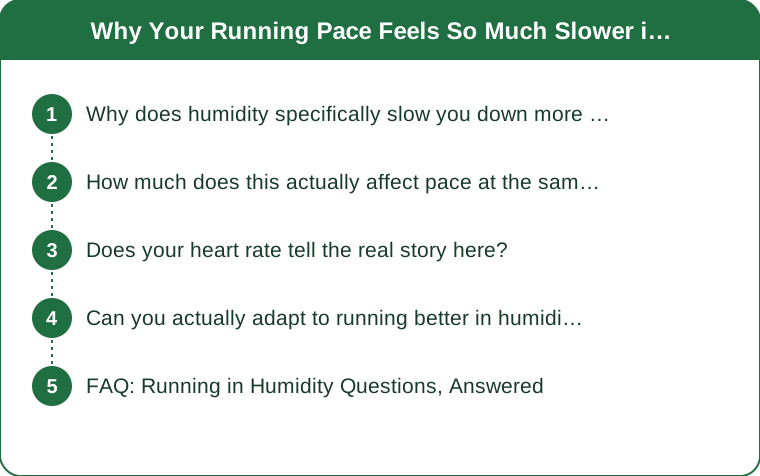
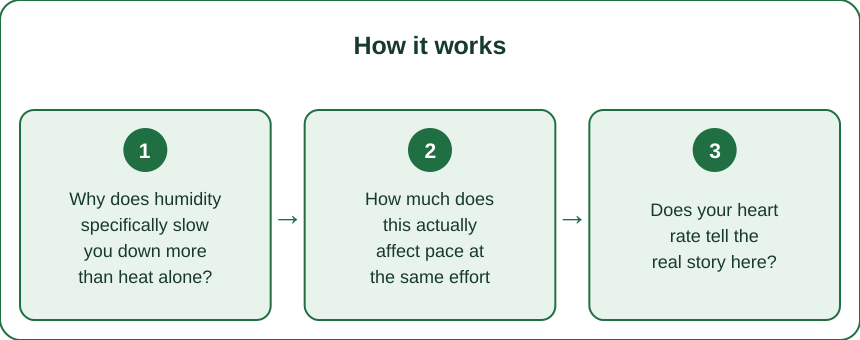
Why does humidity specifically slow you down more than heat alone?
Sweat cools your body through evaporation, and high humidity slows evaporation significantly since the surrounding air is already saturated with moisture — your body keeps sweating, but that sweat sits on your skin rather than evaporating and cooling you, meaning your core temperature rises faster than it would in dry heat at the same temperature reading.
How much does this actually affect pace at the same effort level?
Studies on heat and humidity’s effect on endurance performance generally show a measurable pace reduction, often in the range of 10-20 seconds per mile or more at matched perceived effort in high humidity compared to cooler, drier conditions — this varies by individual heat acclimation and the specific humidity level.

Does your heart rate tell the real story here?
Yes — heart rate at a given pace typically runs higher in humid conditions than in cooler, drier conditions, because your cardiovascular system is doing double duty: sustaining the running effort and also pumping more blood to the skin for cooling. This is exactly why matching your usual pace in humidity often feels disproportionately hard.
Can you actually adapt to running better in humidity over time?
To a meaningful degree, yes — consistent training in humid conditions produces heat acclimation adaptations (increased plasma volume, earlier sweat onset, more efficient cooling) over roughly 1-2 weeks of repeated exposure, which measurably improves performance in humid conditions compared to someone without that acclimation.
FAQ: Running in Humidity Questions, Answered
Should you go by pace or heart rate/effort on humid training days?
Most coaches recommend going by heart rate or perceived effort rather than forcing your usual pace, since pace alone doesn’t account for the added cooling demand.
How long does heat and humidity acclimation typically take?
Most research suggests noticeable adaptation within 1-2 weeks of consistent exposure, with continued smaller improvements over several more weeks.
Does hydration status make humid running feel even harder?
Yes — dehydration compounds the cardiovascular strain humidity already creates, making adequate hydration especially important in humid conditions.
TL;DR:
- Humidity slows sweat evaporation, which is your body’s main cooling mechanism during exercise
- This forces your cardiovascular system to work harder, directly reducing sustainable pace at the same effort
- Heart rate at matched pace typically runs higher in humidity than in cooler, drier conditions
- Consistent training in humid conditions produces real heat acclimation within 1-2 weeks
The slower pace on a humid day isn’t your fitness slipping — it’s your body correctly prioritizing not overheating over hitting your usual number.
Keep Reading
This article is for general informational purposes only and is not medical advice. It is not a substitute for professional diagnosis or treatment. Always consult a qualified healthcare provider about your individual situation, especially before making significant changes to your diet or exercise routine.