Running Through Motivation Droughts: The Seasons Every Runner Survives
Every running life contains droughts — the weeks where the shoes stay wistful by the door — and the runners still running at sixty aren’t the ones who never lost motivation; they’re the ones who built systems that didn’t need it. The drought-survival guide.

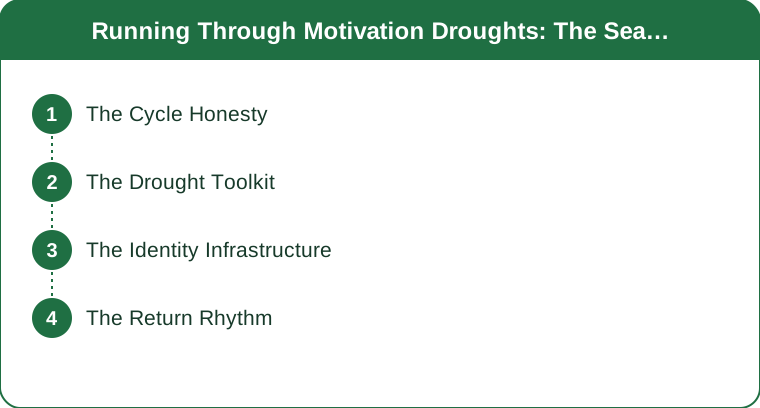
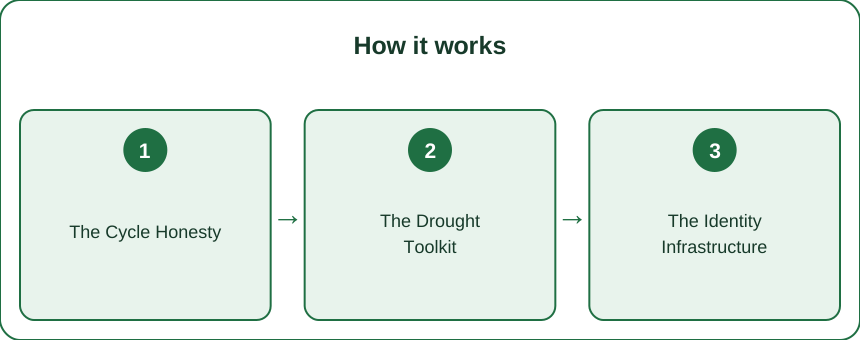
The Cycle Honesty
Normalizing the drought: the motivation-wave reality (enthusiasm cycles for every runner — the post-race dip, the dark-season fade, the life-load crowd-out; the drought is a season, not a verdict; the ADHD-fitness chapter’s interest-cycling truth applies to everyone at lower amplitude), the drought-versus-burnout triage (the low-motivation-but-fine-when-running weeks are droughts — run smaller and wait; the dread-plus-fatigue-plus-worse-sleep cluster is the overtraining chapter — rest properly first), and the data comfort (long-term runners average multiple motivation dips yearly — the veterans’ logs show the gaps; the difference is the gaps stayed gaps instead of becoming endings).
The Drought Toolkit
The interventions that restart: the shrink-the-run move (the ten-minute contract — the lazy-girl rule at running scale; the drought’s runs are attendance, not training; most ten-minute contracts run longer once started, and the ones that don’t still count), the novelty levers (the new route, the podcast-only week, the trail detour, the run-to-a-café format — the drought often bores before it tires; the route rotation is medicine), the social rescue (the run club, the friend-run standing date — the body-double chapter’s engine; droughts survive worst in isolation), the goal-shape change (the drought after a race often wants NO goal — the maintenance-jog permission from the post-race chapter; alternately, the tiny-goal — the streak of one-mile days — that rebuilds momentum without demanding enthusiasm), and the kit spark (the new-shoes or new-playlist boost — shallow, real, occasionally exactly enough).

The Identity Infrastructure
The systems that don’t need motivation: the schedule-anchor doctrine (the runs living at fixed slots — the Tuesday-Thursday-Saturday architecture that habit runs when enthusiasm won’t; the decision was made in January, not renegotiated each morning), the friction audit (the kit laid out, the route pre-chosen — the ADHD-transition wisdom for every drought brain), the minimum-viable identity (the two-runs-weekly floor that keeps ‘runner’ true during droughts — the identity maintained is the comeback halved; the fitness-restart chapter’s muscle-memory math applies to habits too), and the seasons-planning (the training year with BUILT-IN low seasons — the post-race recovery month, the winter maintenance block; the drought that’s scheduled isn’t a drought, it’s periodization).
The Return Rhythm
Coming back kindly: the no-ceremony restart (the drought ends with one small run, not an announcement — the restart-fast doctrine; the comeback plan that requires confession momentum never starts), the comparison ban (the drought-adjacent runs compared to last week’s zero, never to peak-season paces — the kind math), the enjoyment audit (the return runs deliberately pleasant — the favorite route, the golden hour, the no-watch option; the drought often started where enjoyment stopped, and the return re-installs it first), and the long-view frame (the running life measured in years keeps droughts proportionate — the month off inside a decade of running is a rounding error; the shoes wait patiently, and the road doesn’t keep attendance). Shrink it, schedule it, restart without ceremony: the drought, outlasted.
Droughts are seasons, ten-minute contracts restart them, schedules outlast enthusiasm, return without ceremony. The runners still running at sixty built systems — motivation was never the fuel.
Keep Reading
This article is for general informational purposes only and is not medical advice. It is not a substitute for professional diagnosis or treatment. Always consult a qualified healthcare provider about your individual situation, especially before making significant changes to your diet or exercise routine.